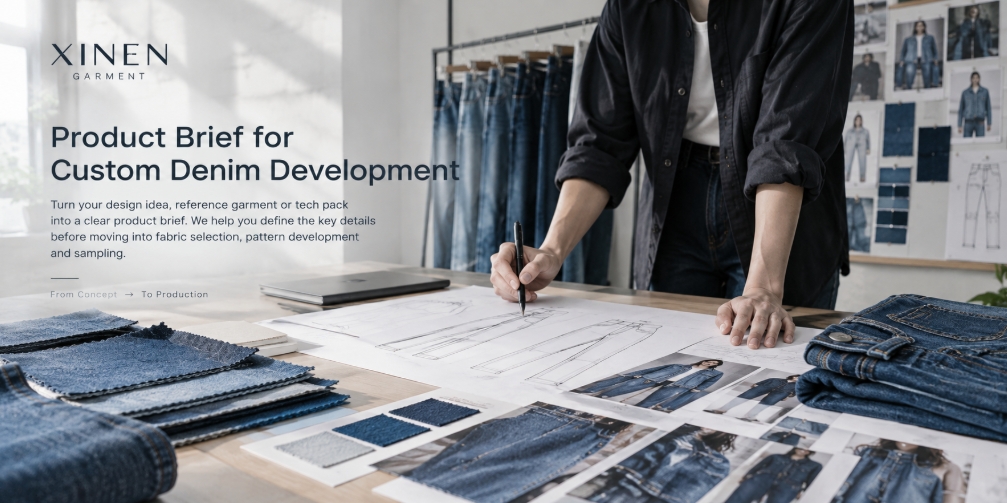
A successful custom denim project does not begin with an immediate price quote or an instant fabric order. Before pattern development, fabric sourcing, or physical sampling can take place, the garment must be clearly defined.
In custom denim development, the initial stage requires building a comprehensive product brief. This document serves as a shared technical and aesthetic baseline between your brand’s design team and our development team. It aligns expectations regarding silhouette, drape, construction details, wash targets, and trim requirements.
A product brief is not strictly required to be a fully executed, factory-ready technical package from day one. While established brands often submit complete specifications, emerging labels or contemporary designers may start with a physical reference garment, a detailed sketch, a mood board, or a core measurement sheet. The primary goal of the product brief stage is to review the available information, identify missing or contradictory specifications, and establish a clear technical foundation before committing resources to physical sampling.
What Is a Denim Product Brief?
A denim product brief is the foundational blueprint for a garment before initial pattern drafting and fabric cutting begin. Unlike standard apparel, denim involves complex interactions between raw fabric properties, wet processing shrinkage, localized dry finishing, and structural seam construction. A clear product brief establishes all critical parameters upfront to ensure sample iterations remain accurate and efficient.
Depending on your brand’s current stage of development, a denim product brief documents:
- Product Category: The specific garment type (e.g., five-pocket jeans, denim jacket, denim skirt, overall, or overshirt).
- Target Silhouette & Fit Profile: The intended shape and spatial relationship to the body (e.g., high-rise wide-leg, relaxed tapered, boxy oversized, or slim straight).
- Core Measurement Specifications: Key dimensional parameters or an established size chart.
- Fabric Direction: Weight expectations (oz/sq yd), fiber content (100% cotton rigid vs. stretch blends), weave structure, and raw shade character.
- Wash & Finishing Targets: Desired shade reduction, surface abrasion, vintage effects, or clean rinse requirements.
- Construction Specifications: Seam types, pocket geometry, fly closures, paneling, and thread color/gauge callouts.
- Trims & Branding: Shank buttons, rivets, zippers, waistband patches, and woven label placements.
- Collection Context: The intended market positioning, wear environment, or visual aesthetic of the final line.
What We Review Before Development Starts
When a brand submits a project proposal, our development team conducts a technical evaluation of the core garment variables to identify what is defined and what requires further clarification.
| Development Variable | Core Elements Reviewed | Practical Examples |
| Product Type | Garment classification & functional requirements | Standard 5-pocket jeans, baggy jeans, straight leg, relaxed denim trousers, denim skirts, denim jackets, or utility overshirts. |
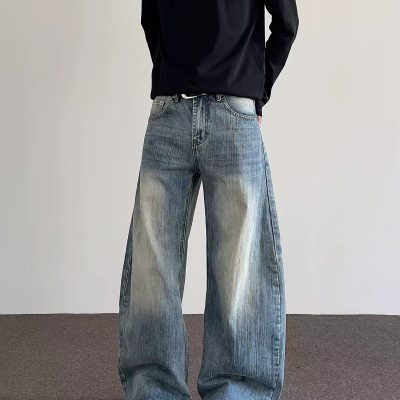
| Fit & Silhouette | Proportions, rise height, and leg volume | High-rise straight, mid-rise relaxed, drop-crotch baggy, exaggerated wide-leg, slim tapered, or cropped boxy cuts. |
| Measurement Chart | Key dimensional specs across critical points | Waist, front/back rise, hip, thigh, knee, leg opening/hem sweep, and inseam. |
| Fabric Direction | Material behavior, weight, and composition | Rigid 100% cotton, comfort stretch (1–2% elastane), heavy-weight (13 oz+), mid-weight (11–12 oz), open-end vs. ring-spun slub. |
| Wash & Finishing | Surface treatment, shade reduction, and distressing | Clean raw rinse, medium vintage stonewash, heavy bleach, whiskering, hand-sanding, edge abrasion, or localized destruction. |
| Construction Details | Structural assembly and seam configurations | Chain-stitch hems, flat-felled inseams, exposed button fly, YKK locking zipper, coin pocket placement, or reinforced pocket bags. |
| Branding & Trims | Hardware finishes and labeling details | Custom-embossed shank buttons, copper rivets, genuine/jacron leather back patches, main woven labels, and care tags. |
What Can You Send Us?
Projects enter our development pipeline at various stages of completion. You do not need an exhaustive factory tech pack to initiate discussions, provided the core product direction can be established.
                      DEVELOPMENT INPUT MODALITIES
┌───────────────────────────┐           ┌───────────────────────────┐
│     FULLY SPECIFIED       │           │    CONCEPT & REFERENCE    │
├───────────────────────────┤           ├───────────────────────────┤
│ • Complete Tech Pack      │    OR     │ • Physical Reference Sample│
│ • Full Measurement Chart  │           │ • Design Sketches / CADs  │
│ • Wash & Trim Callouts    │           │ • Visual Mood Boards      │
└─────────────┬─────────────┘           └─────────────┬─────────────┘
              │                                       │
              └───────────────────┬───────────────────┘
                                  │
                                  ▼
┌───────────────────────────────────────────────────────────────────┐
│                     DENIM PRODUCT BRIEF REVIEW                    │
│    (Evaluation of technical feasibility, shrinkage compensation,  │
│             and structural construction requirements)             │
└───────────────────────────────────────────────────────────────────┘
You can initiate a product brief using any combination of the following inputs:
- Complete Tech Pack: Detailed garment CADs, point-of-measurement (POM) sheets, seam construction details, and callout pages.
- Physical Reference Garment: An existing sample or vintage piece provided to clone or modify fit, fabric character, or construction details.
- Measurement Sheet: A standalone chart specifying target dimensions for key grading points.
- Design Sketches or CADs: Visual representations showing style lines, pocket shapes, stitching details, and paneling.
- Mood Boards & Wash References: High-resolution photography or physical swatches illustrating target wash shades, wear patterns, or fabric textures.
- Conceptual Direction: Clear written notes outlining the intended fit profile, market positioning, and core product features.
When information is incomplete—such as having a design sketch without a measurement chart—we work with you to define the missing technical specifications before proceeding to pattern drafting. Learn more about specifying technical details on our page for Denim Tech Pack Development.
Turning a Design Idea Into a Development Brief
Transitioning from an initial concept to a structured development brief follows an organized review process:
                  PRODUCT BRIEF DEVELOPMENT SEQUENCE
┌──────────────────────┐     ┌──────────────────────┐     ┌──────────────────────┐
│ 1. Initial Intake &  │ ──> │ 2. Technical Gap     │ ──> │ 3. Specification     │
│ Document Review      │     │ Analysis             │     │ Alignment            │
└──────────────────────┘     └──────────────────────┘     └──────────────────────┘
                                                                     │
┌──────────────────────┐     ┌──────────────────────┐                │
│ 6. Advance to Fabric │ <── │ 5. Final Brief       │ <──────────────┘
│ & Pattern Stage      │     │ Sign-Off             │
└──────────────────────┘     └──────────────────────┘
- Initial Intake Review: We examine all submitted materials—including CADs, physical samples, measurement tables, and wash photos—to understand your aesthetic and functional goals.
- Gap Analysis: We identify unconfirmed variables, such as missing rise dimensions, unspecified thread colors, undefined pocket specs, or ambiguous wash targets.
- Specification Alignment: We discuss options to resolve any technical gaps, establishing clear targets for fabric weight, weave construction, seam finishing, and wash parameters.
- Working Brief Consolidation: All confirmed specifications are compiled into an organized product brief that guides patternmakers, sample cutters, and wash technicians.
- Brief Sign-Off: Both teams confirm the brief specifications, establishing a clear baseline for initial prototype development.
- Development Handoff: The project moves directly into the next phase: evaluating fabric options and drafting the initial master pattern.
Why the Product Brief Matters for Denim
Denim manufacturing differs fundamentally from standard flat-woven or knit garment production. In denim, every material and structural choice directly influences down-line processing results.
                   INTERDEPENDENT DENIM VARIABLES
                     ┌──────────────────────┐
                     │    DENIM FABRIC      │
                     │ (Weight/Composition) │
                     └──────────┬───────────┘
                                │
          ┌─────────────────────┴─────────────────────┐
          ▼                                           ▼
┌──────────────────┐                        ┌──────────────────┐
│ PATTERN & FIT    │ <────────────────────> │ WASH & FINISHING │
│ (Ease/Shrinkage) │                        │ (Shrink/Abrasion)│
└──────────────────┘                        └──────────────────┘
- Fabric Stretch vs. Pattern Fit: A 100% cotton rigid denim requires different pattern ease compared to a comfort-stretch denim. Substituting a stretch fabric onto a rigid pattern can result in an oversized, ill-fitting garment.
- Wash Shrinkage vs. Final Dimensions: Denim fabrics shrink irregularly during wet washing—often shrinking more in the warp (length) than in the weft (width). Pattern dimensions must be mathematically expanded based on the selected fabric’s wash profile to ensure the final garment matches the target spec.
- Seam Construction vs. Wash Results: The choice between a flat-felled seam and an overlocked seam with topstitching affects how wash abrasion registers along garment edges. Heavy stone washing can damage light seams if thread gauge and stitch density are not selected correctly.
- Garment Architecture vs. Drape: Heavyweight 14 oz rigid denim behaves like a structural shell, holding wide-leg or boxy shapes firm, whereas a 10 oz denim drapes closer to the body. The pattern cut must account for the fabric weight to achieve the intended silhouette.
Establishing a complete product brief upfront minimizes unpredictable results during physical sampling, reducing revision loops and development costs.
When You Already Have a Tech Pack
If your brand provides a fully executed technical package, our team reviews the documentation from a production feasibility perspective:
- Seam & Construction Review: Verifying that specified seam details, pocket attachments, and fly constructions are technically viable for the target denim weight.
- Wash & Fabric Compatibility: Checking that selected callouts—such as heavy laser destruction or intense stonewashing—are suitable for the specified fabric composition without compromising garment strength.
- Pattern & Shrinkage Calibration: Converting target garment measurements into working pattern dimensions that account for wet processing shrinkage.
- Trim & Hardware Check: Reviewing button/rivet placements, pocket bag fabrics, zipper specifications, and patch callouts for structural compatibility.
Having a complete tech pack streamlines the initial review stage, allowing us to move quickly into fabric sourcing and pattern development while maintaining your exact specifications.
When You Only Have a Design Concept
If you are an emerging label or launching a new line with visual ideas rather than complete technical documentation, you can still begin the development process.
When starting with design concepts, physical reference garments, or sketches:
- We use your reference garment or visual inspiration to help establish target fit, rise height, leg openings, and overall proportions.
- We recommend standard construction methods, seam choices, and pocket geometries based on proven denim assembly standards.
- We assist in selecting appropriate fabric weights, weave structures, and wash effects that align with your visual target.
- We document all confirmed decisions into a structured working specification sheet before sample cutting begins.
Note: While we help refine technical specifications from design inputs, brands remain responsible for defining their overall aesthetic direction and commercial positioning.
What Happens After the Product Brief?
Once the product brief is established and agreed upon, your project advances through our structured development workflow:
                    DEVELOPMENT PROCESS WORKFLOW
┌──────────────────────────────────────────────────────────────────┐
│ 01 PRODUCT BRIEF                                                 │
│ Establish fit, fabric, wash, construction, and trim requirements │
└─────────────────────────────────┬────────────────────────────────┘
                                  │
                                  ▼
┌──────────────────────────────────────────────────────────────────┐
│ 02 FABRIC SELECTION                                              │
│ Source and confirm denim weight, composition, and shade base     │
└─────────────────────────────────┬────────────────────────────────┘
                                  │
                                  ▼
┌──────────────────────────────────────────────────────────────────┐
│ 03 FIT & PATTERN DEVELOPMENT                                     │
│ Draft master patterns calibrated for fit ease and wash shrinkage │
└─────────────────────────────────┬────────────────────────────────┘
                                  │
                                  ▼
┌──────────────────────────────────────────────────────────────────┐
│ 04 SAMPLING & FIT APPROVAL                                       │
│ Construct physical prototypes for live fit and spec evaluation   │
└─────────────────────────────────┬────────────────────────────────┘
                                  │
                                  ▼
┌──────────────────────────────────────────────────────────────────┐
│ 05 WASH & FINISHING                                              │
│ Refine wet/dry wash formulas, surface abrasion, and hand feel     │
└─────────────────────────────────┬────────────────────────────────┘
                                  │
                                  ▼
┌──────────────────────────────────────────────────────────────────┐
│ 06 BULK PRODUCTION                                               │
│ Execute graded cutting, assembly, washing, QC, and final packing │
└──────────────────────────────────────────────────────────────────┘
Continue reviewing our development process: Next: Fabric Selection
Explore additional stages of our custom manufacturing capabilities:
- Explore pattern drafting parameters under Fit & Pattern Development.
- Learn about prototype review on our Sampling & Fit Approval page.
- Review full-scale production workflows via Denim Manufacturing.
- View custom jeans development options under Custom Jeans.
What We Need From Your Brand
To help us evaluate your project efficiently, provide as much of the following information as is currently available:
- [x] Product Type: The specific garment class (e.g., 5-pocket jeans, jacket, skirt, or utility pants).
- [x] Visual References: Reference garments, detailed sketches, CAD drawings, or mood boards.
- [x] Fit Objectives: Target silhouette, rise preference, leg volume, and drape requirements.
- [x] Measurement Specifications: Full measurement chart, point-of-measurement sheet, or physical sample to measure.
- [x] Fabric Direction: Preferred weight (oz), fiber composition (rigid vs. stretch), and surface texture.
- [x] Wash & Finish Targets: Reference images showing color depth, wash shade, fading, or distressing.
- [x] Construction & Trim Notes: Pocket styles, fly closures, thread color ideas, and hardware preferences.
- [x] Project Scope: Target order quantities, delivery timelines, or collection context (if established).
Note: If some of these details are not yet finalized, provide what you have, and we will work with you to clarify the remaining items during the brief review.
Frequently Asked Questions
Do I need a complete tech pack to start a denim development project?
No. While a complete tech pack speeds up initial review, you can start with a physical reference garment, design sketches, CADs, or a detailed measurement sheet. We work with you to establish missing technical specifications during the product brief stage.
Can I start with a reference garment?
Yes. Providing a physical reference sample is an effective way to establish fit, silhouette, and construction details. We measure your sample across key points and incorporate any requested modifications into the project brief.
What if I only have sketches or product images?
If you only have sketches or imagery, we help translate your visual concepts into technical specifications. We recommend appropriate construction methods, fabric weights, and measurement proportions to build a working brief prior to pattern drafting.
What information is most important in a denim product brief?
The most critical elements are the garment classification, target silhouette/fit profile, fabric composition (rigid vs. stretch), and primary wash targets. Because fabric properties and wash shrinkage directly impact pattern dimensions, establishing these parameters early prevents unnecessary sampling loops.
Can the fabric be selected after the product concept is defined?
Yes. Defining the product concept, target fit, and intended use in the product brief helps determine the optimal fabric specifications. Once the brief establishes whether the garment requires structured rigid denim, light drape, or stretch, we select matching fabric options in the Fabric Selection stage.
Does a product brief include wash development?
The product brief identifies your target wash shade, fading character, and surface distressing goals using photos, swatches, or written callouts. The physical chemical formulation and wash recipe engineering then take place during the dedicated wash development phase.
What happens after the product brief is confirmed?
Once the brief is reviewed and agreed upon, the project moves directly into fabric selection and master pattern drafting. Physical prototype cutting begins after fabric properties and initial pattern calculations are completed.
Have a Denim Product in Development?
Whether you have a fully executed technical package, a physical reference sample, or an initial design concept, the first step in custom denim development is establishing a clear product brief.
Contact our technical team to submit your project files and discuss your development requirements before sampling begins.