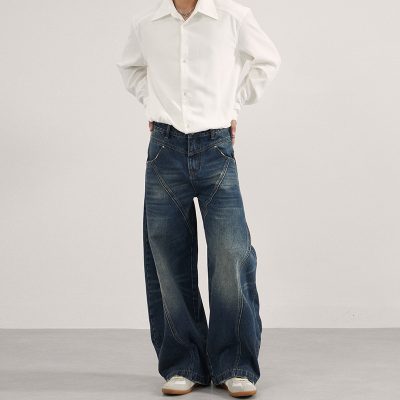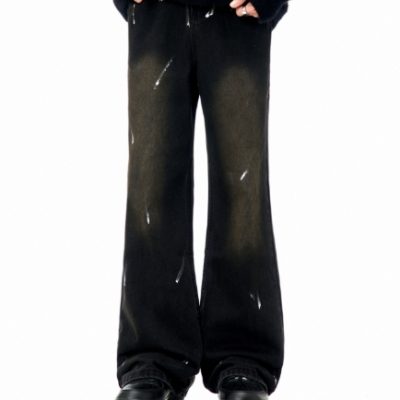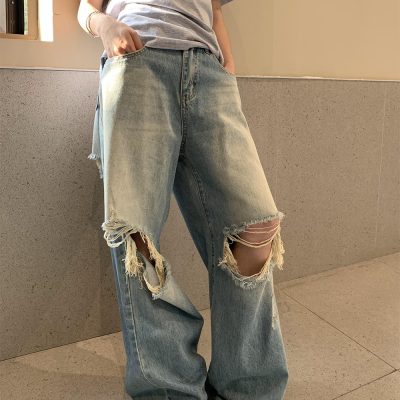
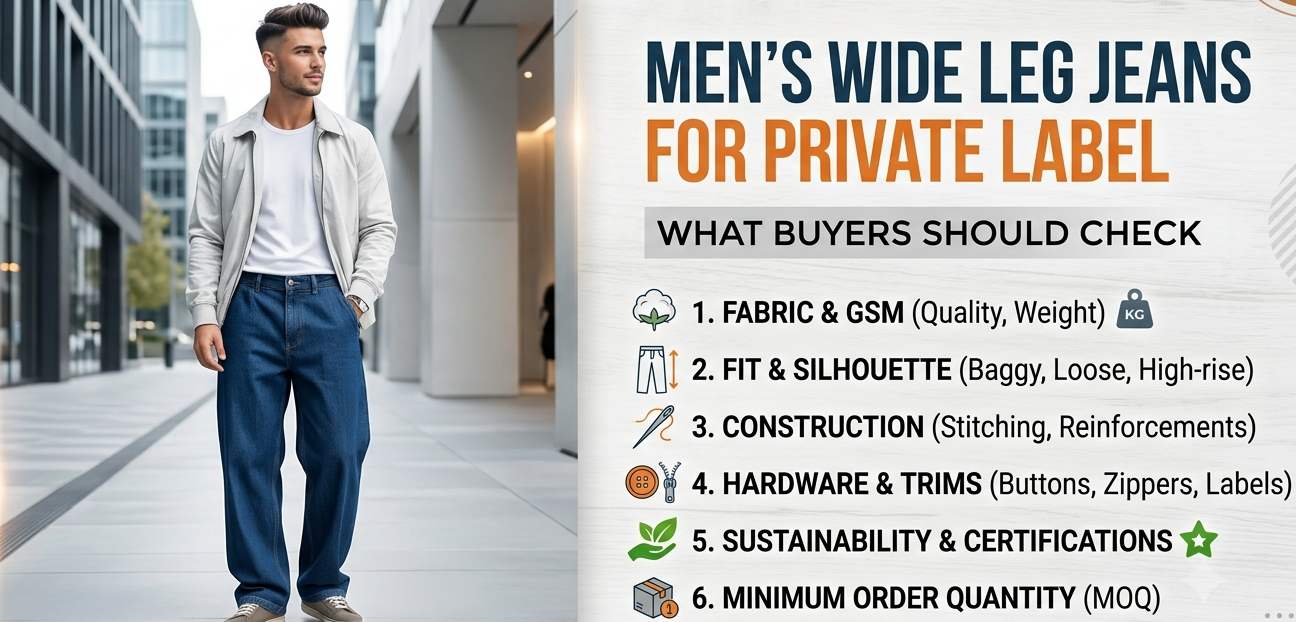
The demand for men’s wide-leg jeans remains strong in the global apparel market. For private labels, importers, and wholesalers, executing this silhouette correctly is essential for brand reputation. Unlike standard straight-leg or slim fits, wide-leg denim requires specific attention to fabric drape, pattern engineering, and wash behavior.
This guide outlines the critical production factors buyers must evaluate when sourcing custom wide-leg jeans.
Key Production Checks for Wide-Leg Denim
1. Fabric Weight and Composition
The success of a wide-leg jean depends entirely on how the fabric falls.
- Optimal Weights: Mid-to-heavyweight denim, typically between 12oz and 14oz, provides the necessary structure to hold the wide shape without collapsing.
- Composition: 100% cotton rigid denim is generally preferred for this style. If stretch is required for comfort, the elastane content should be kept minimal (1-2%) to prevent the jeans from losing their structural integrity and bagging out at the knees.
2. Pattern Engineering and Fit Transition
“Wide-leg” does not mean oversized across the entire garment. Buyers must carefully review the tech packs and initial samples for proper grading.
- The Block: The fit around the waist and upper hip must remain relatively tailored. The widening should begin smoothly from the lower hip or upper thigh.
- Inseam and Hem: Because the hem opening is significantly larger, the inseam length needs precise calculation to ensure it breaks correctly over footwear without excessive dragging.
3. Wash Techniques and Shrinkage Control
Industrial wash processes, such as enzyme washes or vintage treatments, physically alter the denim.
- Shrinkage Calculation: Wide-leg patterns use more fabric, meaning the total shrinkage volume is higher than in slim fits. Buyers must ensure the manufacturer calculates and tests shrinkage rates accurately before cutting the bulk fabric.
- Seam Puckering: Heavy washes on wide panels can lead to uneven puckering. Inspect samples to ensure the side seams remain flat and visually clean after the wash process.
4. Hardware and Construction Durability
More fabric equates to a heavier garment, which puts additional stress on the construction.
- Stitching: Specify double-needle or triple-needle stitching on high-stress areas like the yoke and inseam.
- Hardware: Ensure heavy-duty zippers (such as YKK) and reinforced custom rivets are used to handle the weight of the denim.
Why Choose Xinen Garment for Custom Denim Production
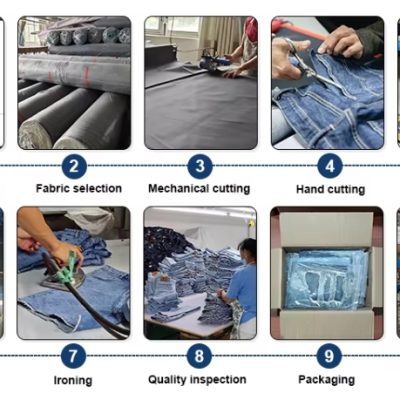
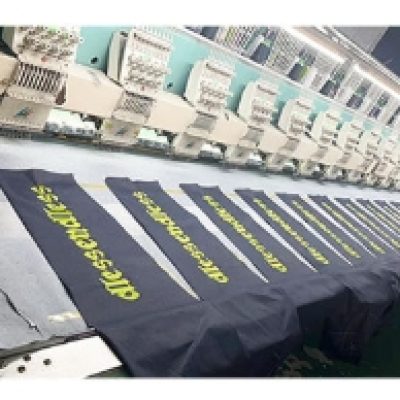
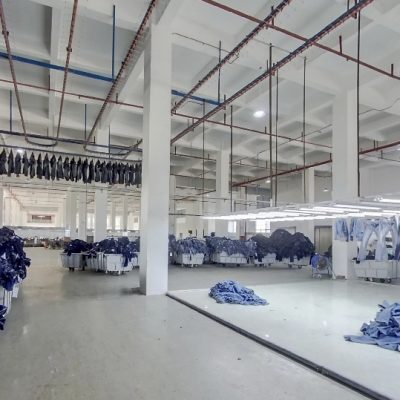
Producing high-quality denim requires specialized machinery and technical expertise. Xinen Garment serves as a direct manufacturing partner for importers, wholesalers, and private labels focused on custom denim apparel.
- Technical Capability: We manage complex pattern grading and fit engineering, ensuring specific silhouettes like wide-leg, baggy, and cargo styles are executed exactly to your tech pack specifications.
- Controlled Wash Processes: We offer precise control over various wash techniques, accurately accounting for shrinkage and maintaining consistent fabric integrity across bulk orders.
- B2B Focus: Our production lines are optimized for B2B clients, providing clear communication, strict quality control standards, and reliable timelines from the sampling phase through to final delivery.
Frequently Asked Questions (FAQ)
What is the standard production timeline for custom wide-leg jeans?
Typically, the sampling phase takes 7 to 14 days after tech pack approval. Bulk production generally requires 30 to 45 days, depending on the complexity of the wash and the total order quantity.
Can I customize the wash and distressing details?
Yes. Buyers can provide reference images or physical samples. We replicate specific enzyme washes, vintage fades, and custom distressing while maintaining the structural durability of the jeans.
Do you provide custom hardware for private labels?
Yes. We source and install customized hardware, including branded shank buttons, rivets, leather patches, and woven labels, to align with your brand identity.
How do you ensure sizing consistency in wide-leg styles?
We adhere strictly to the approved size grading chart. Our quality control team conducts dimension checks post-wash and post-production to verify that the waist, thigh, and hem measurements meet the specified tolerances.