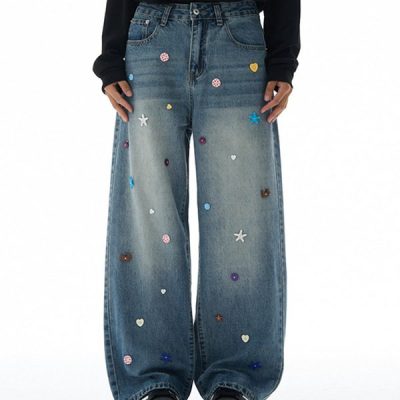
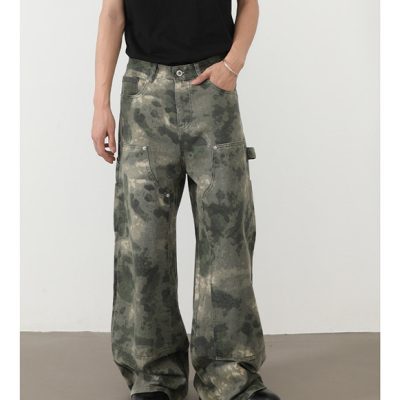
In custom denim development, a design concept can look balanced on a flat sketch, render, or reference photograph, yet still require precise pattern drafting before it translates into a proper fitting garment.
A good denim fit is never created by simply picking a stock size code or applying a standard template to different fabric qualities. A production pattern serves as the technical blueprint of the garment. It must translate your brand’s intended silhouette, physical measurements, fabric behavior, and construction specifications into two-dimensional pattern pieces that can be cut, sewn, industrial washed, and produced at scale.
Following the initial Product Brief and Fabric Selection, fit and pattern development is where design intent meets structural engineering. At Xinen Garment, our product development team works with fashion labels, streetwear brands, and established apparel lines to transform abstract fit directions into working production patterns.
What Is Denim Fit & Pattern Development?
While “fit” and “pattern” are closely connected, they represent two distinct aspects of the development process:
- Fit: Refers to how the finished, washed garment sits, drapes, and conforms to the human body in motion and at rest. It dictates the visual proportion, balance, and wearing comfort of the piece.
- Pattern Development: The technical process of creating the exact geometric pattern shapes, seam allowances, and assembly logic required to achieve that intended fit across physical fabrics.
In denim manufacturing, pattern making cannot treat measurements as isolated numbers on a chart. Increasing or decreasing a single spec—such as raising the back rise or widening the knee—changes the tension, drape, and balance of the entire garment. The pattern must orchestrate these relationships so the finished piece reflects your intended silhouette.
What We Consider When Developing a Denim Fit
When building a denim pattern, we evaluate key dimensional areas as an interconnected system rather than independent points of measurement.
                  +-----------------------------------+
                  |         1. Waist & Rise           |
                  |  Positioning, curvature, balance  |
                  +-----------------+-----------------+
                                    |
                  +-----------------v-----------------+
                  |       2. Hip, Seat & Thigh        |
                  | Volume distribution & seat shape  |
                  +-----------------+-----------------+
                                    |
                  +-----------------v-----------------+
                  |     3. Knee, Leg & Opening        |
                  |  Taper, drop, drape & line flow   |
                  +-----------------------------------+
1. Waist
The waistband spec defines where the garment anchors on the body. We consider waistband curvature (straight vs. contoured waistband blocks), band height, button closure placement, and how the waistband integrates with the front and back rise to prevent gaping or pulling during movement.
2. Rise (Front & Back Rise)
The front and back rise establish the crotch depth, waistband position, and vertical balance of the jeans. The ratio between the front rise and back rise dictates how the seat sits, how the garment anchors over the hips, and how the waistband aligns relative to the natural waist or high hip.
3. Hip & Seat
The hip measurement and seat curve control the volume across the lower torso. Seat shape pattern drafting determines whether the garment creates a flat, structured line through the back panels or accommodates a fuller, more contoured anatomical fit without excess fabric pooling under the rear yoke.
4. Thigh
Thigh proportions set the initial leg volume directly below the crotch join. The thigh dimension dictates whether a garment behaves as a slim, tailored cut, a classic straight line, or a loose, relaxed fit. Thigh width must also be balanced against the seat curve to prevent tension lines along the inner seams.
5. Knee & Leg Shape
The transition from the upper thigh through the knee defines the drop and flow of the leg silhouette. The knee point acts as a pivot area; its width relative to the thigh and leg opening determines whether the leg profile appears tapered, parallel, bootcut, or shaped.
6. Leg Opening
The bottom hem width establishes the low profile of the leg. The leg opening contributes directly to how the hem stacks over footwear, breaks over the shoe, or falls cleanly toward the floor in cropped, standard, or wide-leg styles.
7. Inseam & Overall Length
Inseam length controls proportion and visual height. Because denim shrinks differently along the warp (length) than the weft (width) during industrial washing, pattern inseam specifications must account for post-wash fabric retraction.
8. Front & Back Pattern Balance
A critical technical factor in jeans pattern making is the balance between front and back panels. Inseams and outseams must align without twisting, and the pitch of the back leg must counterbalance the front leg to ensure the side seam falls straight down the leg without migrating forward or backward.
Fit Development for Different Denim Silhouettes
Every garment category and silhouette profile requires distinct pattern drafting considerations. We work with brands across several core design directions:
+--------------------+--------------------------------+-------------------------------------+
| Silhouette         | Key Pattern Proportions        | Primary Structural Objective        |
+--------------------+--------------------------------+-------------------------------------+
| Straight Jeans     | Balanced thigh-to-hem ratio;   | Clean vertical fall along outseam;  |
|                    | standard pitch lines           | no pooling or pulling at knee       |
+--------------------+--------------------------------+-------------------------------------+
| Relaxed Jeans      | Extended hip & thigh allowances| Unrestricted movement with clean    |
|                    | Moderate leg taper or drop     | seat structure                      |
+--------------------+--------------------------------+-------------------------------------+
| Baggy & Wide-Leg   | Increased seat depth; broad    | Voluminous silhouette that holds    |
|                    | thigh, knee & hem sweeps       | shape without collapsing awkwardly  |
+--------------------+--------------------------------+-------------------------------------+
| Slim / Fitted      | Contoured seat & thigh; reduced| Close body relationship; minimal    |
|                    | excess fabric through knee     | excess volume; balanced stretch tension|
+--------------------+--------------------------------+-------------------------------------+
Straight Jeans
Straight & Relaxed Jeans rely on a proportional, parallel relationship from the mid-thigh through the leg opening. The pattern drafting goal is a clean, vertical line along both outseams and inseams, maintaining structure without clinging to the calf or knee.
Relaxed Jeans
Relaxed fits incorporate additional volume through the seat, rise, and thigh blocks. The pattern must balance this extra room with proper rise positioning so the garment feels comfortable through movement without sagging excessively at the crotch or pooling unnaturally behind the knees.
Baggy & Wide-Leg Jeans
Baggy & Wide-Leg Jeans demand precise balance. Because wide patterns carry substantial fabric weight, the crotch curve, back yoke pitch, and waist anchor must be engineered so the weight of the legs does not pull the waistband down. The leg pattern must maintain volume down to the hem without twisting when walked in.
Slim and Fitted Styles
Fitted cuts require closer tolerances along the body lines. Pattern development for slim styles must account for leg articulation, calf room, and thigh movement. When using stretch fabrics, pattern dimensions are drafted under-size (negative ease) depending on the elastic recovery properties of the chosen material.
How Fabric Behavior Influences Pattern Drafting
A denim pattern cannot be drafted in isolation from the textile. Fabric composition, weight, and weave structure directly affect how pattern dimensions render on the finished piece.
- Rigid vs. Stretch Denim: Rigid 100% cotton denims require positive mechanical ease in the pattern to allow normal sitting and movement. Stretch denims (incorporating elastane or performance stretch fibers) require pattern adjustments to account for stretch percentage, holding power, and elastic recovery.
- Fabric Weight & Structure: Heavyweight denims ($13.5\text{–}16\text{ oz}$) sit firm, resist drape, and occupy physical bulk inside seam allowances, requiring slightly larger pattern allowances at join points. Lighter denims ($10\text{–}12\text{ oz}$) drape more fluidly and sit closer to the skin.
- Shrinkage & Wash Direction: Industrial wet processing (laundry washing, bleaching, stone washing, or enzyme treatments) causes physical fabric contraction. Patterns are drafted using adjusted shrinkage ratios derived from fabric testing to ensure the garment hits target specifications after final wash finishing.
For a deeper look at material properties, review our guide to Fabric Selection.
Pattern Development From Different Starting Points
Brands arrive at the development stage with varying levels of technical documentation. We structure our pattern making approach around what your team provides:
[Brand Input] ──> [Technical Review] ──> [Pattern Drafting] ──> [Initial Prototype]
Option A: Complete Tech Pack & Spec Sheet
If your brand provides a fully specified Denim Tech Pack Development file with measurement charts and construction notes:
- We review your measurement specs, rise ratios, and construction callouts for production viability.
- We cross-reference your specs against the selected fabric’s shrinkage and torque characteristics.
- We digitize and draft the first iteration pattern directly to your target measurements.
Option B: Physical Reference Garment
If you provide an existing vintage piece, reference sample, or benchmark garment:
- We analyze the physical garment’s measurements, rise pitch, seat shape, and panel constructions.
- We digitize the reference dimensions into CAD pattern software.
- We incorporate any modifications your brand specifies (e.g., adjusting leg opening width, lengthening rise, or updating pocket shapes).
Option C: Design Concept, Moodboard, or Sketch
If you have visual concepts, sketches, or photographic references without exact measurements:
- We discuss your target fit intention, silhouette goals, and end customer preferences.
- We establish key base measurements (waist, hip, rise, thigh, inseam, hem) aligned with your target fit category.
- We draft a starting pattern block designed to capture the visual silhouette for initial sample evaluation.
Pattern Development and Construction Integration
In custom denim manufacturing, pattern pieces must account for specific sewing and hardware construction details. A pattern is not just a shape—it includes technical allowances for assembly:
- Waistband Construction: Patterning accounts for chain-stitch stretch, waistband interlinings, or continuous split-waistband joins.
- Front Fly & Crotch Join: Patterns include precise extensions for button fly plackets or zipper fly construction to ensure the fly stays flat without bowing.
- Back Yoke & Pockets: Yoke seam angles dictate the seat contour and visual line across the rear. Pocket placement templates ensure rear pocket spacing and angles remain balanced across pattern sizes.
- Seam Allowances & Stitching: Seam allowances are specified for flat-felled outseams, lap-seamed inseams, or overlocked open edges based on your desired interior finish.
From Pattern Drafting to Sample Evaluation
Pattern development is an iterative process that relies on physical testing. Once a first-pattern draft is completed, it moves into initial sample cutting and assembly.
[Draft Pattern] ──> [Sew Sample] ──> [Industrial Wash] ──> [Fit Evaluation] ──> [Pattern Revision]
The physical prototype allows our technical team and your brand to evaluate the real-world behavior of the pattern:
- Checking visual silhouette proportions on a fit model or dress form.
- Verifying that seam lines remain straight after industrial washing.
- Assessing movement comfort, crotch clearance, and waistband anchoring.
- Confirming that pocket positions and trim placements appear visually correct.
Any required adjustments identified during sample fitting are applied directly back to the CAD pattern master before moving forward in the development cycle. Learn more about prototype review on our Sampling & Fit Approval page.
What We Need From Your Brand
To begin fit and pattern development for your custom denim project, providing the following information helps establish an efficient development path:
- Product Category: (e.g., Men’s 5-pocket jean, Women’s high-rise wide leg, Denim jacket, Cropped denim skirt)
- Target Fit Direction: (e.g., Slim, Straight, Relaxed, Baggy, Oversized)
- Development Starting Point: Tech pack spec sheet, physical reference garment, or design sketches
- Fabric Direction: Selected or target denim fabric weight, composition, and stretch profile
- Core Measurement Specifications: Waist, front/back rise, thigh, knee, leg opening, and inseam targets (if available)
- Design & Construction Details: Pocket styles, fly preference (button vs. zip), waistband type, and hem finish
- Target Size Range: Base sample size (commonly Size 32 for men, Size 27/28 for women) and planned production size run
If your brand is missing some of these details, we can help define key measurement parameters based on your core product goals.
What Happens After Fit & Pattern Development?
Fit and pattern development is stage three of our complete custom denim development process:
01 Product Brief
  └──> 02 Fabric Selection
        └──> 03 Fit & Pattern Development
              └──> 04 Sampling & Fit Approval
                    └──> 05 Wash & Finishing
                          └──> 06 Bulk Production
Once your initial pattern master is drafted, your project moves directly into physical sample creation and fit review.
Next Step in Development:
Proceed to 04 — Sampling & Fit Approval
Frequently Asked Questions
1. What is denim fit and pattern development?
Denim fit and pattern development is the technical process of translating a design concept, sketch, or specification sheet into physical two-dimensional pattern pieces. It accounts for body measurements, silhouette balance, fabric behavior, shrinkage rates, and seam construction to produce a garment that fits as intended.
2. Can you develop a jeans pattern from a reference garment?
Yes. We can measure and analyze a physical reference garment to extract its pattern proportions, rise angles, seat shape, and leg dimensions, creating a digitized CAD pattern that captures the fit of the original while applying any updates your brand requests.
3. Do I need a complete tech pack before starting pattern development?
No. While a complete tech pack speeds up development, we can also build patterns from physical reference garments, detailed specification charts, or clear visual concepts accompanied by key target measurements.
4. Can you work from basic measurements and visual sketches?
Yes. If you provide key base measurements (such as waist, rise, hip, thigh, and inseam) along with visual sketches or moodboard references, our technical team can draft a starting base pattern for initial prototype sampling.
5. How does fabric affect denim pattern making?
Fabric weight, weave tightness, fiber content (rigid vs. stretch), and expected wash shrinkage directly change pattern dimensions. Patterns must be drafted with specific shrinkage and elasticity allowances calculated for the exact fabric quality being used.
6. What key measurements are most critical for jeans pattern development?
The most critical measurements include waist circumference, front rise, back rise, hip/seat width, high thigh width, knee width, leg opening width, and inseam length. The proportional relationships between these specs dictate the overall fit profile.
7. Can a pattern be revised after reviewing the first sample?
Yes. Pattern making is refined during physical sampling. If the first prototype reveals necessary adjustments—such as tapering the leg, altering rise depth, or adjusting pocket placement—those changes are updated on the digital pattern file prior to sample re-evaluation or production approval.
8. Does initial pattern development include production pattern grading?
Pattern drafting begins with a single base sample size (such as Size 32 or Size 28). Once the base pattern fit is physically approved via sampling, production pattern grading—expanding the pattern across your full size range—is performed as a distinct technical step before bulk production.
Need Help Developing the Fit of Your Denim Product?
Whether you already have a fully specified tech pack, a benchmark reference garment, or an initial fit direction, building a working production pattern requires balancing silhouette, measurements, fabric traits, and construction logic. Contact our product development team to review your denim project requirements and discuss the next steps for sample development.