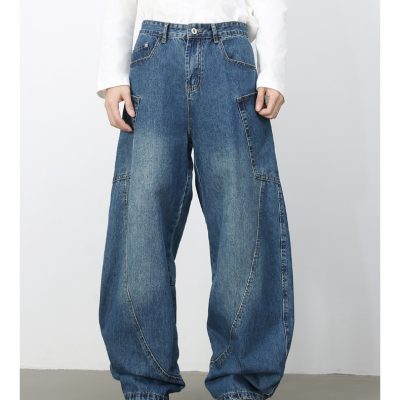
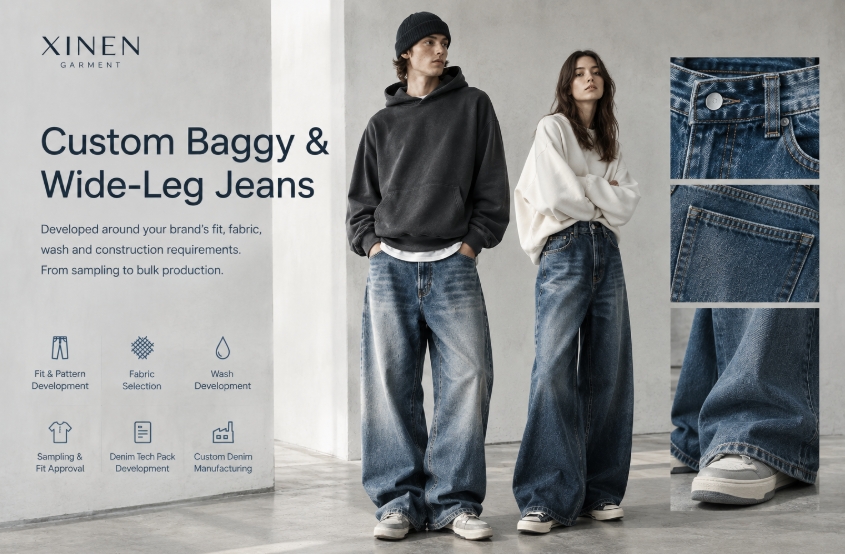
Developing custom baggy and wide-leg jeans requires careful attention to pattern balance, fabric weight, and laundry behavior. Loose silhouettes cannot be achieved simply by taking a standard slim or straight-leg jean pattern and scaling up the dimensions. Adding volume without adjusting the rise, seat, thigh curvature, and fabric structure often results in poor fit, unwanted drag lines, or awkward draping.
At Xinen Garment, custom baggy and wide-leg jeans are engineered around each brand’s specific product vision, fit profile, fabric preferences, and finish requirements. Whether developing a heavy 15 oz rigid streetwear jean with severe distressing or a fluid, wide-leg trouser cut for a contemporary casual collection, every style is built from the pattern level up to ensure volume translates into an intentional, repeatable silhouette across bulk production.
Product Overview
Custom baggy and wide-leg jeans developed for fashion brands, independent labels, and apparel companies that require precise control over silhouette, fabric drape, laundry washes, and construction details. Styles can be developed from a complete tech pack, physical reference garment, measurement chart, or initial design concept, with full fit, fabric, and wash review through physical sampling prior to bulk manufacturing.
Applications
Custom baggy and wide-leg denim production supports a range of brand directions and casualwear categories:
- Streetwear & Urban Collections: Oversized proportions, heavy denim weights, dropped crotches, specialized pocket layouts, and heavy dry-process distressing.
- Contemporary & Premium Casualwear: Balanced wide-leg silhouettes, clean or subtle vintage washes, precise leg lines, and elevated trim packages.
- Unisex & Gender-Neutral Collections: Adaptable rise heights, balanced hip-to-waist ratios, and relaxed thigh ease engineered for versatile fitting.
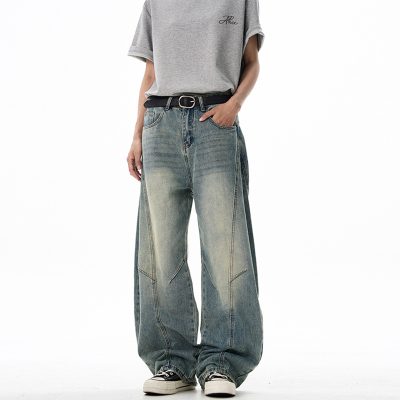
- Fashion-Forward Seasonal Lines: Statement cuts including exaggerated flares, barrel legs, cargo utility panels, and structural leg seams.
Custom Baggy & Wide-Leg Jeans for Fashion Brands
While “baggy” and “wide-leg” are often referenced together, they represent distinct approaches to pattern making and volume distribution.
- Baggy Jeans: Typically feature general ease throughout the garment, incorporating extra room through the seat, crotch, thigh, and leg. The resulting silhouette is relaxed and low-slung, often pooling slightly at the hem.
- Wide-Leg Jeans: Focus volume along the leg line itself, sweeping outward or dropping straight down from the hip or upper thigh toward the leg opening. This creates a more structured, vertical, or flowing silhouette depending on the fabric used.
These design approaches can also be combined—for instance, in an oversized cargo jean that incorporates a loose seat with a wide, straight leg. Xinen Garment develops these styles according to a brand’s specific measurement charts, physical reference garments, or tech packs, ensuring the volume sits correctly on the body.
       [ Baggy Silhouette ]                      [ Wide-Leg Silhouette ]
 ┌──────────────────────────────┐          ┌──────────────────────────────┐
 │ • Extra ease at seat & thigh │          │ • Fitted or natural waist/hip│
 │ • Relaxed, low-slung rise    │          │ • Straight or A-line leg line│
 │ • Tapered or pooled hem      │          │ • Wide, open hem clearance   │
 └──────────────────────────────┘          └──────────────────────────────┘
What Can Be Customized?
Developing a custom loose-fitting jean involves coordinating multiple physical elements to achieve the desired balance between volume and drape.
Fit & Silhouette
- Rise Heights: Low, mid, or high rise, calibrated against front and back crotch curves to control how the waistband sits.
- Seat & Thigh Ratio: Specific ease allowances to establish either a slouchy, oversized look or a smooth, fitted hip transitioning into a wide leg.
- Leg Line & Opening: Straight wide leg, tapered baggy, flared, or barrel-shaped leg profiles.
- Inseam Length: Cut to break dramatically over footwear or cropped to hang clean above the floor.
Denim Fabric
- Construction: 100% cotton rigid denim for structural volume, or comfort-stretch denim for subtle drape and flexibility.
- Fabric Weight: Lightweight (9–11 oz) for fluid motion, midweight (12–14 oz) for classic daily wear, or heavyweight (15–16+ oz) for rigid, structural silhouettes.
- Surface Character: Open-end yarns for a flatter vintage finish, or ring-spun yarns for slub texture and linear fading.
Wash & Finishing
- Shade Development: Raw/unwashed, light tinting, medium indigo enzyme, or bright light-blue bleaching.
- Aesthetic Effects: Laser whiskering, hand-sanding, stone washing, ozone fading, or subtle tinting.
- Distressing Details: Edge grinding, knee blowouts, localized repair stitching, or frayed hems.
Construction & Hardware
- Pocket Architecture: Deep oversized scoop pockets, exaggerated coin pockets, cargo flap pockets, or carpenter tool pockets.
- Seam Engineering: Heavyweight chain stitching, flat-felled inseams, contrast thread weights, or reinforced bar-tacks at stress points.
- Trims: Custom shank buttons, branded rivets, leather or paper waistband patches, and woven main labels.
What Is the Difference Between Baggy and Wide-Leg Jeans?
Understanding the technical differences between these two silhouettes helps define pattern specifications early in development:
| Element | Baggy Jeans | Wide-Leg Jeans |
| Waist & Rise | Often cut larger or lower to drop on the hips | Typically fitted closer to the natural waist or high hip |
| Seat & Crotch | Extended crotch depth and loose seat balance | Contour-fitted through the seat before opening into the leg |
| Thigh Volume | High volume originating directly from the crotch | Measured flare or straight line extending from the upper thigh |
| Hem Clearance | Varies; often stacks over shoes or features a slight taper | Wide, unobstructed leg opening that drops straight or flares |
| Drape Effect | Slouchy, casual, and relaxed profile | Clean, elongated, or fluid drape |
A garment can combine aspects of both—such as an oversized, wide-leg utility pant. The actual silhouette is defined during pattern drafting rather than by the label name alone.
Developing the Fit of Baggy & Wide-Leg Jeans
Creating a successful loose silhouette requires balance across the whole garment pattern. Simply widening a leg seam without modifying the upper block often causes the pant to drag backward, bulge around the fly, or twist along the inseam.
                  [ Front & Back Rise Balance ]
                                │
                                ▼
  [ Seat Ease Allowance ] ────────────── [ Crotch Curve Geometry ]
                                │
                                ▼
             [ Leg Line & Hem Opening Calibration ]
Key pattern considerations include:
- Rise and Crotch Geometry: Adjusting the slope and depth of the front and back crotch curves prevents excess fabric from bunching at the front fly when seated or walking.
- Grainline Alignment: In wider pattern pieces, strict alignment with the fabric’s warp direction is required to prevent the side seams from twisting forward after laundry processing.
- Weight Distribution: Balancing the weight of a wide leg so the garment hangs naturally from the waist without pulling down on the lower back.
Whether starting from a tech pack, sketch, or physical sample, initial patterns are tested through physical prototype sampling to review proportion, mobility, and drape.
Learn more about how pattern geometry and physical fit adjustments are handled during development on our page for denim fit and pattern development.
How Denim Fabric Affects Baggy & Wide-Leg Jeans
Fabric weight, weave tightness, and fiber composition directly impact how a loose silhouette behaves on the body. The same pattern will yield vastly different shapes depending on the chosen mill specification.
┌─────────────────────────────────────────────────────────────┐
│                 FABRIC BEHAVIOR ON SILHOUETTE               │
├──────────────────┬──────────────────┬───────────────────────┤
│ Fabric Type      │ Weight Range     │ Silhouette Effect     │
│ Heavy Rigid      │ 15–16+ oz        │ Holds sharp, structural shape; architectural lines │
│ Midweight Rigid  │ 12–14 oz         │ Classic 90s draping; moderate body and structure  │
│ Light / Stretch  │ 9–11 oz          │ Fluid movement; breaks easily over shoes           │
└──────────────────┴──────────────────┴───────────────────────┘
- Rigid Denim (100% Cotton): Holds its structural shape, allowing wide legs to maintain an architectural, boxy, or straight line down to the floor. Rigid denim is ideal for wide-leg statement cuts and vintage-inspired baggy styles.
- Comfort-Stretch Denim: Introduces subtle drape and flexibility. While stretch offers comfort around the waist and seat, high-elastane blends can make wide legs hang limp if the fabric weight is too light.
- Fabric Weight & Hand Feel: Heavier denim (14 oz and above) drives a bold, defined silhouette that resists collapsing. Lighter denim (below 12 oz) produces a softer, flowing drape that moves with the wearer.
If a brand changes the fabric selection after pattern development, the pattern must normally be reviewed to account for changes in drape and fabric weight.
To explore mill options, fabric weights, and material testing, review our guide on denim fabric selection.
Wash Development for Baggy & Wide-Leg Jeans
Wet and dry processing alter more than just color; they change fabric density, hand feel, and finished garment measurements. Because baggy and wide-leg styles contain more total fabric surface area than slim fits, laundry processes must be monitored to ensure consistent results.
Raw Garment Assembly ──► Dry Processing ──► Wet Processing ──► Drying & Recovery
                           (Laser/Manual)    (Enzyme/Stone)     (Dimensional Check)
- Dimensional Shrinkage: Heavy washing, stone washing, or high-heat drying causes denim to contract in both warp (length) and weft (width). Patterns are scaled with specific shrinkage allowances based on pre-wash fabric testing.
- Drape Softening: Washing removes warp starches applied during weaving. A rigid, boxy raw denim jean will become significantly softer and drape closer to the body after enzyme or stone washing.
- Proportional Distressing: Abrasion details such as hand-sanding, laser whiskering, and knee blowouts must be visually scaled to fit wider leg panels so they do not look lost on the larger surface area.
For an overview of industrial laundry techniques and wash targets, visit our page covering custom denim wash development.
Sampling and Fit Approval
Physical sampling acts as a crucial checkpoint where the pattern, fabric choice, and wash targets are tested together before releasing a style for mass production.
Tech Pack / Reference ──► Prototype Sample ──► Wash Target Sample ──► Pre-Production (PP) Sample
During sampling, product developers and designers evaluate:
- Silhouette & Proportions: Verifying that the rise height, seat ease, and leg clearance match the intended visual balance.
- Measurement Accuracy: Checking finished garment dimensions against the measurement spec across key tension points (waist, hip, front rise, thigh, inseam, leg opening).
- Fabric Drape & Weight: Confirming that the selected fabric holds or breaks along the leg line as intended.
- Wash & Distressing Execution: Reviewing shade depth, abrasion placement, and hand feel after laundering.
Depending on the complexity of the design and wash requirements, pattern or wash adjustments may be implemented before the final pre-production (PP) sample is approved.
For details on sample review protocols and approval workflows, read about denim sampling and fit approval.
Can Baggy Jeans Be Developed From a Tech Pack or Reference Sample?
Brands can start custom development using various forms of technical documentation or physical references:
┌─────────────────────────────────────────────────────────────────┐
│                    PROJECT STARTING POINTS                      │
├────────────────────────────┬────────────────────────────────────┤
│ Complete Tech Pack         │ Full BOM, spec sheet, and wash targets│
│ Physical Reference Sample  │ Existing garment for fit or wash reference│
│ Measurement Spec + Photos  │ Basic chart paired with visual targets   │
│ Design Sketch or Concept   │ Visual direction requiring spec drafting │
└────────────────────────────┴────────────────────────────────────┘
- From a Tech Pack: Complete specs providing graded measurement charts, seam allowances, thread colors, and wash references allow pattern drafting to begin directly.
- From a Physical Reference Sample: A physical garment can be measured and analyzed to replicate a target fit, crotch curve, or leg width, then adjusted to match the brand’s aesthetic.
- From Sketches or Concepts: When technical specs are incomplete, missing parameters (such as shrinkage rates, seam types, or pocket sizes) are established during initial technical review and pattern drafting.
Learn how to prepare documentation for factory submission on our page dedicated to denim tech pack development.
Baggy & Wide-Leg Denim Styles
Custom manufacturing capabilities support a broad range of loose-fitting denim styles:
- Classic 90s Baggy Jeans: Deep rise, wide thigh ease, and slight hem taper designed to pool over footwear.
- Straight Wide-Leg Jeans: Clean waist and hip transitioning into an un-tapered vertical leg line from thigh to hem.
- Oversized Utility & Cargo Jeans: Wide-leg construction integrated with functional cargo pockets, hammer loops, and reinforced seams.
- Skater & Slouchy Jeans: Dropped crotch and low-slung waist with generous leg clearance for maximum movement.
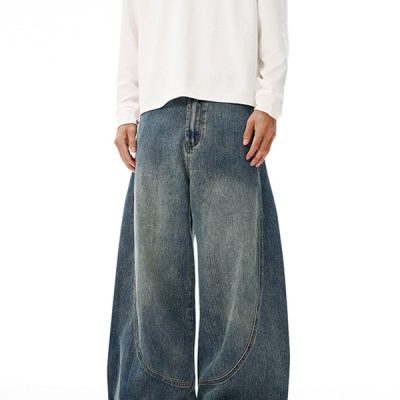
- Barrel-Leg & Curved-Leg Jeans: Engineered side seams that bow outward at the knee before curving back in at the hem.
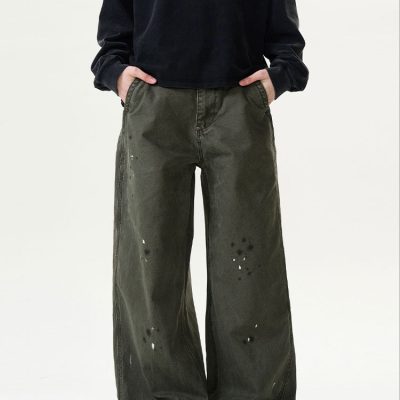
- Distressed & Vintage Wide-Leg Jeans: Loose silhouettes finished with heavy stone washing, laser whiskering, manual grinding, or bleach treatments.
Baggy & Wide-Leg Jeans for Different Brand Types
Manufacturing requirements adapt to the operational goals and market positioning of different fashion labels:
┌─────────────────────────────────────────────────────────────────┐
│                       BRAND FOCUS AREAS                         │
├──────────────────────────┬──────────────────────────────────────┤
│ Streetwear Labels        │ Heavyweight denim, bold volume, manual distressing │
│ Premium Denim Brands     │ Ring-spun fabrics, subtle drape, wash consistency │
│ Independent Designers    │ Unique seam lines, custom hardware, pattern support │
│ Commercial Brands        │ Standardized grading, repeatable wash aesthetics  │
└──────────────────────────┴──────────────────────────────────────┘
- Streetwear Brands: Often focus on heavy rigid denims (14–16+ oz), exaggerated leg openings, complex dry-process abrasion, and custom branded hardware.
- Premium Denim Labels: Prioritize refined fabric textures, high-quality yarn compositions, precise shade control, and repeatable fit consistency across production runs.
- Independent Fashion Labels: Frequently require pattern development support to translate early design sketches or vintage garments into production-ready specifications.
- Commercial Apparel Brands: Emphasize standardized size grading, predictable fit metrics, and reliable wash consistency for multi-season style continuity.
From Approved Fit to Bulk Production
Once the pre-production sample is approved, the project transitions into mass manufacturing following a structured workflow:
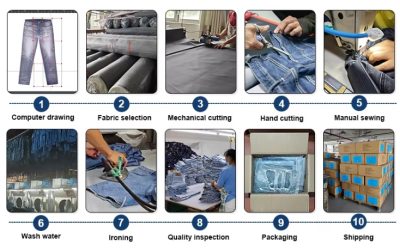
Pattern Grading & Markers ──► Fabric Cutting ──► Line Sewing & Assembly
                                                       │
Final QC & Packaging     ◄── Wet & Dry Washing ◄───────┘
- Pattern Grading: Extending approved base pattern dimensions across the full size run according to established grade rules.
- Fabric Spreading & Precision Cutting: Spreading bulk fabric under controlled tension to prevent grain distortion, followed by precise computerized cutting.
- Garment Assembly: Constructing panels using specialized industrial machinery for heavy denim (lap-seaming, chain stitching, automatic pocket setting, bar-tacking).
- Laundry & Finishing: Processing assembled garments in bulk washing units to apply specified stone washes, enzymes, tinting, or manual abrasion.
- Trim Attachment & Final Inspection: Installing shank buttons, rivets, and patches, followed by full measurement and quality auditing.
Read about factory operations and production processes on our pages for custom denim manufacturing and custom denim production process.
What Should a Brand Provide Before Developing Baggy Jeans?
Preparing key product details before starting development helps ensure clear communication and accurate technical review:
┌─────────────────────────────────────────────────────────────┐
│                  PROJECT INTAKE CHECKLIST                   │
├─────────────────────────────────────────────────────────────┤
│  [ ] Target Silhouette (Baggy, Wide-Leg, Straight, Cargo)  │
│  [ ] Reference Garment, Tech Pack, or Detailed Photos        │
│  [ ] Measurement Spec (Waist, Rise, Thigh, Inseam, Opening)  │
│  [ ] Fabric Preferences (Rigid/Stretch, Preferred Weight)   │
│  [ ] Wash & Finish References (Clean, Vintage, Distressed)   │
│  [ ] Hardware & Branding Specs (Shanks, Rivets, Patches)     │
│  [ ] Size Range & Estimated Order Quantities                 │
└─────────────────────────────────────────────────────────────┘
Providing clear product parameters upfront streamlines early pattern drafting and helps establish an accurate development timeline.
Quality Control for Baggy & Wide-Leg Jeans
Maintaining consistency across loose-fitting denim styles requires systematic checking during production:
┌─────────────────────────────────────────────────────────────┐
│                 QUALITY CONTROL CHECKPOINTS                 │
├──────────────────┬───────────────────┬──────────────────────┤
│ Measurement Audit│ Seam Integrity    │ Wash Consistency     │
│ • Rise & Inseam  │ • Leg symmetry    │ • Shade grouping     │
│ • Thigh & Hem    │ • Stitch density  │ • Abrasion scale     │
│ • Hip clearance  │ • Bar-tack strength│ • Hand feel review   │
└──────────────────┴───────────────────┴──────────────────────┘
- Leg Symmetry & Alignment: Checking that both legs hang evenly without twisting along the inseam or outseam.
- Dimensional Accuracy: Auditing waist, front/back rise, thigh width, and leg openings against approved specification charts within agreed tolerances.
- Construction Strength: Checking thread tension, bar-tack reinforcement at pocket corners and fly bases, and secure attachment of shanks and rivets.
- Shade & Wash Uniformity: Comparing bulk production lots against approved pre-production samples to verify laundry consistency.
Learn more about testing protocols and factory inspection standards on our page for denim quality control.
When Are Baggy & Wide-Leg Jeans Ready for Bulk Production?
An order is ready for bulk production release once all core technical elements have been verified and signed off:
  Fabric Approval   ──► Fit & Spec Approval ──► Wash Approval ──► Trim & BOM Approval
                                                                      │
                                                                      ▼
                                                           BULK PRODUCTION RELEASE
Before releasing production, the following items must be finalized:
- Approved pre-production (PP) sample representing final fit, sewing, and wash.
- Confirmed measurement spec sheet and size grading rules.
- Approved bulk fabric lot and trim package (hardware, labels, patches).
- Finalized packaging specifications.
Revisions requested after bulk cutting or washing has begun can affect garment yield, patterns, and laundry metrics, requiring technical re-evaluation.
Custom Baggy & Wide-Leg Jeans FAQ
1. Can you manufacture custom baggy jeans from a physical reference sample?
Yes. A physical reference garment can be measured to copy its rise, crotch curve, thigh ease, and leg opening width, which are then used to build your custom production pattern.
2. Can you develop wide-leg jeans from a tech pack?
Yes. A tech pack providing a measurement spec sheet, bill of materials (BOM), stitching guidelines, and visual wash references provides all technical data needed to initiate pattern drafting and sampling.
3. What is the main difference between baggy and wide-leg jeans?
Baggy jeans feature extra ease throughout the upper block, seat, and crotch for a slouchy, relaxed fit. Wide-leg jeans typically fit closer through the waist and seat before opening into a broad, straight or flared leg line down to the hem.
4. Can I customize the rise height and leg opening on loose-fit styles?
Yes. Front rise, back rise, thigh width, knee position, and leg opening measurements can all be customized to achieve your brand’s specific silhouette.
5. Does denim fabric weight affect the shape of wide-leg jeans?
Yes. Heavyweight rigid denim (14–16+ oz) holds a structured, boxy shape, while lighter denim (under 12 oz) produces a softer, more fluid drape. Pattern adjustments are made based on your selected fabric weight.
6. Can custom washes and distressing be applied to baggy jeans?
Yes. Washes range from raw and light rinse to heavy enzyme stone washes, bleach treatments, laser whiskering, and manual localized distressing.
7. How does sampling work for wide-leg denim?
Initial samples test pattern geometry, rise balance, and silhouette. Once fit measurements are approved, samples undergo target laundry processing to verify wash appearance, hand feel, and fabric shrinkage before final bulk approval.
8. Can an approved baggy jean style be reordered in future production runs?
Yes. Approved patterns, shrinkage calculations, fabric specifications, and wash formulas are archived to ensure consistency across future repeat production orders.
Discuss Your Baggy & Wide-Leg Jeans Project
Have a reference garment, tech pack, measurement chart, or product concept? Send your available project details to our technical team to review the fit, fabric, wash, and development requirements for your custom style.