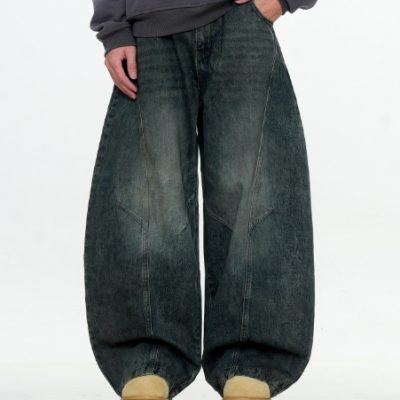
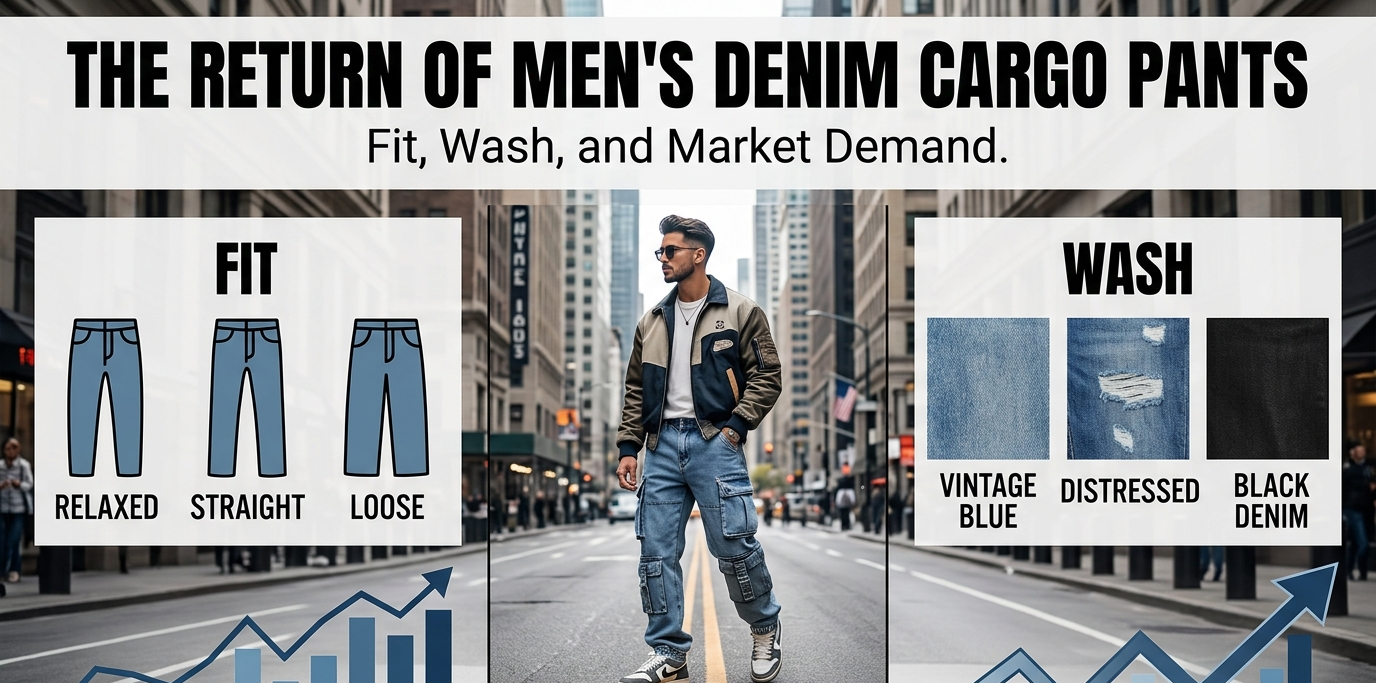
For apparel importers, private labels, and fashion wholesalers planning their 2026 product lines, identifying high-yield silhouettes is a core inventory strategy. While standard five-pocket jeans remain a baseline, market demand data shows a clear resurgence in men’s denim cargo pants.
Adding cargo denim to your collection offers distinct commercial advantages, particularly in terms of higher retail price points and perceived value. However, because cargo pants feature complex construction—including 3D bellows pockets, extra stitching, and heavy pocket flaps—transitioning a design from a tech pack into consistent mass production requires strict technical oversight. This guide covers how market demand, fit engineering, and industrial washes intersect for this utility category.
1. Analyzing the 2026 Market Demand for Cargo Denim
The return of the denim cargo pant is driven by a broader consumer shift toward utility wear and functional streetwear. For independent clothing brands, this category represents stable volume for several reasons:
- Higher Retail Profit Margins: End-consumers expect to pay a premium for cargo styles due to the visible detail work, multi-pocket configurations, and heavy trim execution. This protects your brand’s margins even when raw material costs fluctuate.
- Inventory Stability: Mid-to-heavyweight utility pants cross over seasonal lines. A standard 13oz cargo jean sells reliably across spring, autumn, and winter, reducing the markdown pressures associated with highly cyclical fashion items.
- Mainstream Adoption: Cargo denim is no longer restricted to subcultures. When manufactured with clean, uniform wash finishes and subtle hardware, it integrates smoothly into mainstream menswear and smart-casual collections.
2. Fit Engineering: Protecting the Silhouette
A common production failure in bulk cargo manufacturing is “leg twist” or distorted draping. Because cargo pockets add significant physical weight to the side seams (outseams), the pattern making must be technically balanced.
- Transition to Relaxed Blocks: The 2026 market demands relaxed, straight, or loose-fitting leg lines. Tight or slim cargo templates distort the shape of the pockets and restrict the wearer’s movement.
- Counterbalancing Outseams: A professional pattern maker will adjust the front and back panel dimensions to account for the downward pull of heavy denim pockets. This ensures the side seams stay completely vertical and do not warp or skew forward after industrial washing.
- Accurate Sizing and Measurement Protocols: Brands must establish precise measurement methods in their tech packs. When specifying thigh and knee widths, measurements must be taken flat across the garment at designated drop points below the crotch seam. This guarantees that once the multi-layer cargo pockets are stitched on, the interior leg room matches your size chart exactly.
3. Fabric Weights and Industrial Wash Profiles
The structural integrity of a cargo pant depends on the raw material selection and the specific chemical treatments applied in the industrial laundry facility.
- Minimum Fabric Specifications: Brands should specify fabric weights between 12oz and 14oz. Lightweight denim (under 11oz) lacks the structural strength to support metal snap closures and heavy pocket flaps, causing the fabric to sag and eventually tear at the stress points.
- Enzyme and Stone Washing: Cargo styles look best with textured finishes that highlight the seam construction. Stone washing abrades the edges of the pocket flaps and waistbands naturally, yielding an authentic, broken-in look.
- Utility Tinting and Over-Dyeing: Beyond standard indigo shades, market demand is high for earth-toned utility colors. Applying an over-dye layer—such as olive green, sulfur yellow, or washed charcoal—over a stone-washed base creates a premium, rugged look that sets your brand apart.
4. Branding, Hardware, and Intellectual Property Compliance
Building a private label requires originality. Cargo jeans utilize substantial hardware—such as snap buttons, rivets, and heavy-duty zippers—presenting a clear branding opportunity.
- Original Trim Tooling: High-quality lines use solid brass, copper, or heavy zinc alloy snaps to secure the pocket flaps. These components should be custom-molded with your own original vector logo artwork.
- Avoiding Trademark Infrared Risks: To ensure safe customs clearance and avoid legal disputes, your tech packs must be entirely free from copied branding. Never request a factory to replicate trademarked back-pocket stitching (like the Levi’s arcuate) or copy brand logos onto your hardware. All designs, pocket shapes, and stitch patterns must be completely original to your private label.
Why Choose Xinen Garment for Custom Cargo Denim Production
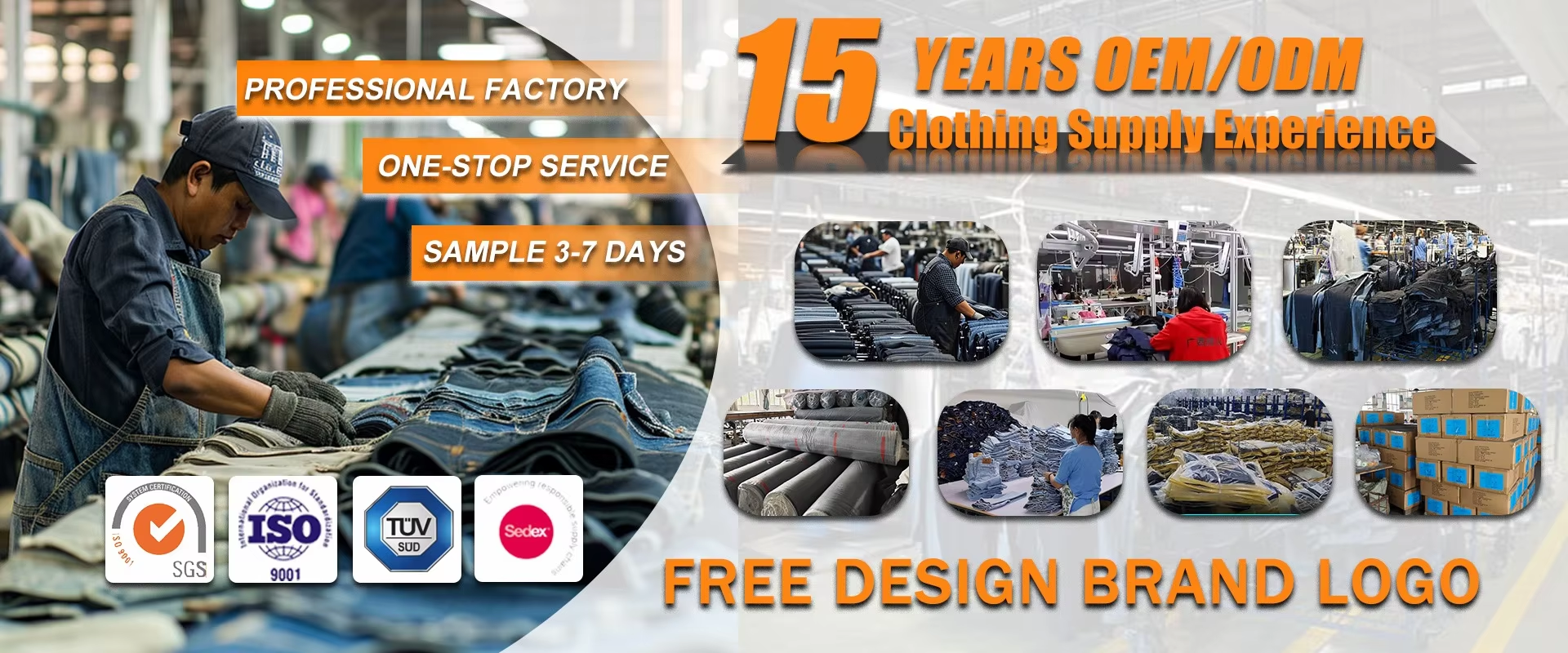
At Xinen Garment, we specialize in high-end, factory-direct denim manufacturing for global B2B buyers, fashion importers, and private label brands.
- Technical Pattern Execution: Our in-house technical department precisely calculates fabric shrinkage and outseam balance, ensuring that complex cargo designs maintain their intended silhouette across your entire size run.
- Heavy-Duty Production Lines: Our facility is equipped with automated sewing machinery capable of handling heavy 14oz denim, executing crisp 3D bellows pockets, and applying dense bartack reinforcements at every pocket corner and stress point.
- Legally Safe Customization: We assist brands in creating proprietary identity programs, tooling custom logo hardware, care labels, and genuine leather waist patches based exclusively on your original vector assets.
- Direct Factory Transparency: By operating directly out of our production centers in China (including Foshan and Guangxi), we eliminate intermediate agent commissions, giving your brand clear bulk pricing, rigorous quality control tolerances, and straightforward delivery timelines.
5. Frequently Asked Questions (FAQ)
What is the minimum order quantity (MOQ) for custom men’s cargo denim?
Our manufacturing MOQs are determined based on the specific fabric weight, composition, and wash complexity you select. For exact volume parameters tailored to your tech pack, please contact our sales team through our website.
How do you prevent pocket flaps from curling upward after laundering?
We fuse an industrial-grade stabilizer (interfacing fabric) inside every pocket flap before sewing. This keeps the multi-layer fabric crisp, structured, and flat, even after aggressive commercial stone washing or over-dye cycles.
Can we combine different reference styles into our custom design?
Yes. If you are developing a unique concept, you can merge different structural elements together into your tech pack. When providing reference photos to our pattern room, we recommend combining your layout images cleanly into a single technical file to ensure our sewing line understands the exact placement and hardware requirements.