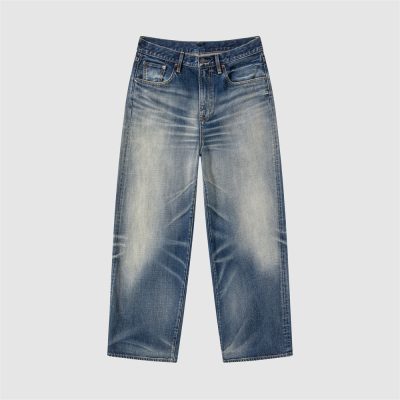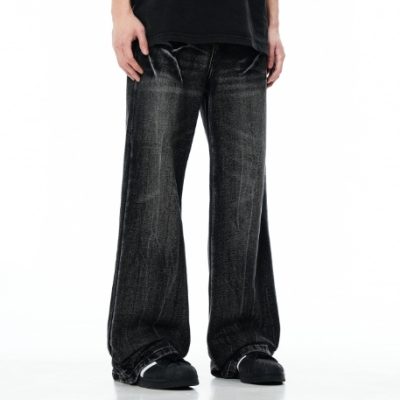
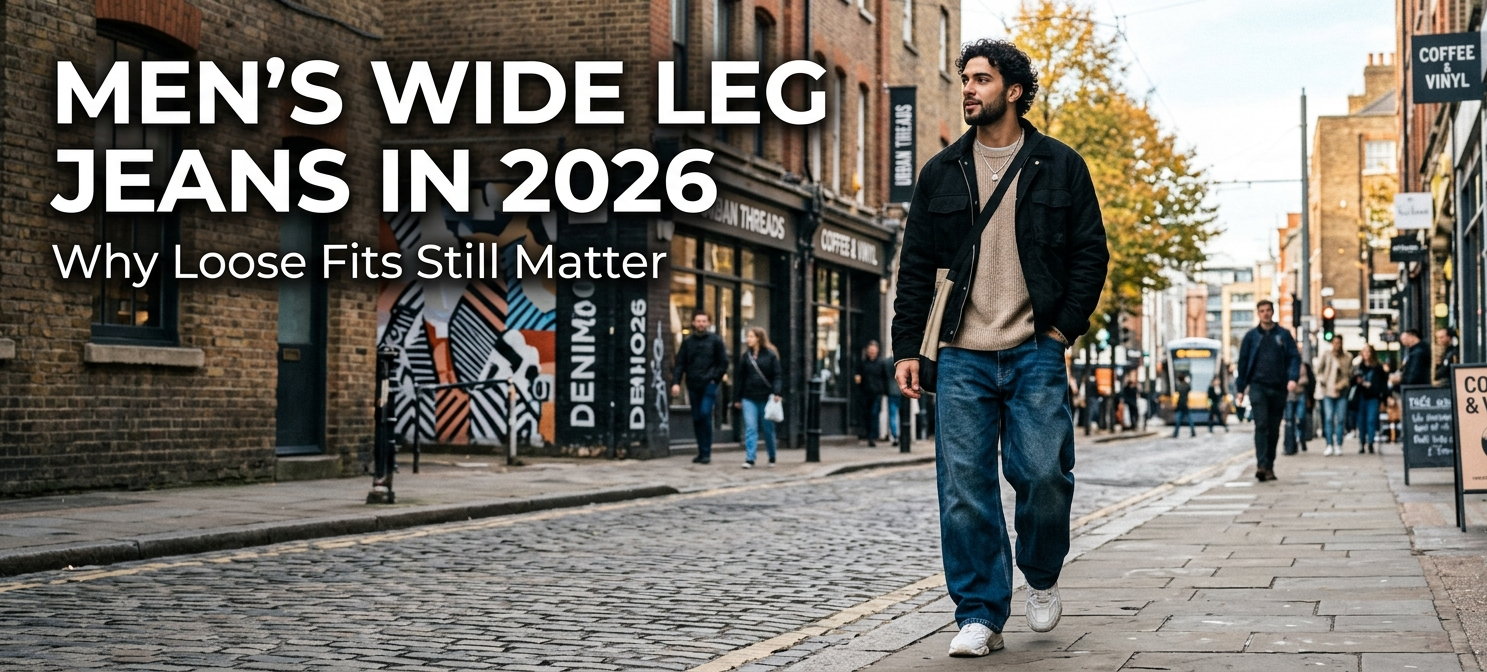
For any clothing brand, private label, or fashion importer planning a denim collection in 2026, the silhouette strategy requires a critical decision. The market has moved far beyond the initial hype of relaxed fits. What started as a post-pandemic shift toward comfort has solidified into a structural staple of modern menswear: the wide-leg jean.
If you are building a denim line today, understanding why loose fits maintain their market share—and how to manufacture them correctly—is the key to securing strong sell-through rates and high margins.
The Market Reality: Why Loose Fits Are Still Dominating in 2026
Many fast-fashion brands originally treated wide-leg denim as a fleeting micro-trend. However, retail data across global markets shows that loose, straight, and oversized fits continue to capture a massive portion of menswear sales.
This stability is driven by three distinct purchasing shifts:
- The High-Low Fashion Integration: Modern consumers routinely pair wide-leg, raw, or heavily washed denim with structured blazers, luxury streetwear, and technical outerwear.
- Generational Rejection of Slim Fits: Younger demographics (Gen Z and Millennials) view relaxed fits as their default daily wardrobe anchor, much like the slim-straight cuts of the 2010s.
- Functional Durability: Driven by the resurgence of workwear and skate subcultures, today’s consumer demands denim that allows full movement without sacrifice.
For an emerging denim brand, skipping wide-leg fits means missing out on the core driver of current wholesale and retail volume.
Technical Pitfalls: Engineering a Wide-Leg Fit Is Harder Than It Looks
A common mistake new private labels make is assuming that wide-leg jeans are simple to produce because they are “just bigger jeans.” In reality, loose-fitting denim requires incredibly precise pattern engineering to avoid looking sloppy, cheap, or ill-fitting at the waist and seat.
When developing tech packs for production, three major engineering factors must be balanced:
1. The Rise and Seat Balance
If a wide-leg pattern simply increases the width of the leg panels without adjusting the rise (the distance from the crotch to the waistband), the fabric will bunch awkwardly around the groin or sag excessively at the back. Premium wide-leg jeans require an engineered mid-to-high rise that holds firmly at the waist while dropping naturally into a roomy seat.
2. Fabric Weight and “Drape”
Wide-leg cuts expose more fabric surface area than slim cuts. If the fabric is too light (under 11oz), the pants will lose their shape and look limp. If the fabric is too stiff or heavy without the right finish, the jeans will look rigid, blocky, and uncomfortable to wear.
3. Pattern Grading Across Sizes
A pattern that looks balanced in a sample size 32 can easily become distorted when scaled up to size 38 or down to size 28. Proper grading ensures that the leg opening maintains a proportional ratio to the waist measurement across your entire size run.
Material Selection: Choosing the Right Fabric and Wash
To help you plan your production budget and line structure, the table below highlights the optimal fabric configurations for 2026 men’s wide-leg collections:
| Fabric Spec | Best Used For | Production & Washing Notes |
| 13.5oz – 14.5oz 100% Cotton Rigid Denim | Heritage workwear, raw denim lines, heavy vintage stonewashes. | High durability. Requires precise shrinkage calculations during pattern making due to intensive washing processes. |
| 12oz – 13oz Cotton Blend (with Tencel/Hemp) | Contemporary fashion labels, lightweight summer drops. | Offers a softer drape and immediate comfort out of the box. Reduces bulkiness at the leg breaks. |
| Open-End vs. Ring-Spun Yarn | Budget vs. Premium positioning. | Ring-spun denim provides distinct grain lines and high-contrast fading patterns that enhance wide-leg silhouettes. |
Wash Trends for 2026
Because wide-leg jeans have more visible fabric surface, the wash technique becomes the focal point of the garment. For 2026, market demand favors:
- 90s Vintage Stonewashes: Balanced, mid-blue tones achieved through eco-friendly enzyme washes.
- Tinted & Overdyed Finishes: Adding subtle yellow, brown, or green sulfur tints over a bleach wash to create an authentic, deadstock vintage appearance.
- Clean Raw Denim: Dark indigo or black rigid denim with contrast stitching, allowing the consumer to break in the shape naturally.
Why Partner with Xinen Garment for Your Denim Brand?
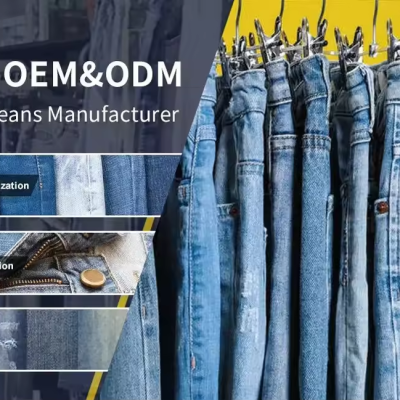
At Xinen Garment, we don’t just execute basic sewing patterns—we manufacture high-end, custom denim apparel tailored for international importers, private labels, and established wholesalers.
If you are looking to launch or upgrade your men’s wide-leg denim collections, here is how our production facility supports your business growth:
- Expert Pattern Engineering: Our in-house design and technical teams specialize in creating balanced, comfortable, and structurally sound relaxed fits. We translate your reference images or rough concepts into production-ready tech packs.
- Advanced Wash & Finish Capabilities: From sustainable ozone washing and stone-washing to detailed manual whiskering, hand-scraping, and custom tinting, we achieve precise color matching and vintage textures.
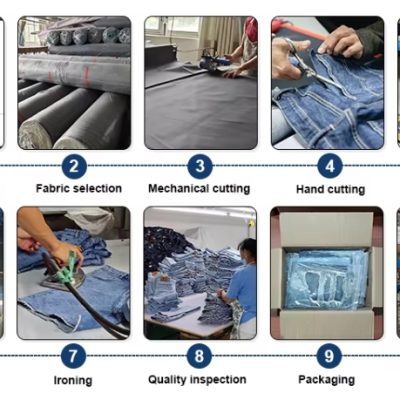
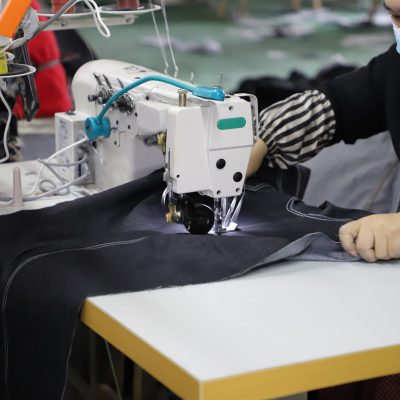
- Strict B2B Quality Control: We handle the entire supply chain, including fabric sourcing, hardware customization (buttons, rivets, leather patches), sample development, and bulk sewing. Every batch undergoes rigorous shrinkage testing and final quality inspections before export.
- Flexible Production for Growing Brands: We understand market testing requirements. Our flexible MOQ (Minimum Order Quantity) structures allow premium private labels to launch varied wash options without overextending on inventory capital.
Frequently Asked Questions (FAQs)
What is the ideal fabric weight for men’s wide-leg jeans?
For a premium, structured look that holds its silhouette, a weight between 13oz and 14.5oz (100% cotton) is highly recommended. For lighter, seasonal collections or streetwear lines focused on a fluid drape, 12oz denim blended with eco-friendly fibers works best.
How do you prevent wide-leg jeans from looking too baggy or sloppy?
The secret lies in the waist-to-hip ratio and proper pattern tailoring. The waistband and upper seat must fit securely, while the widening of the leg should begin cleanly from the upper thigh down to the hem.
Can Xinen Garment customize custom hardware and branding elements?
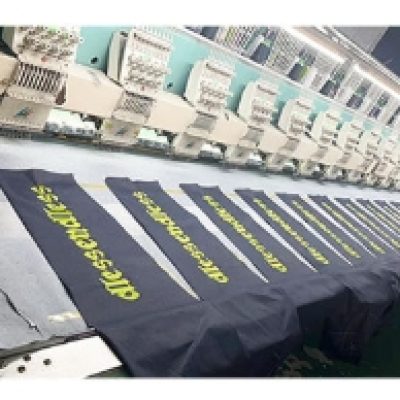
Yes. We provide full private-label customization, including custom-branded metal buttons, rivets, YKK zippers, embroidered logos, custom waist tags, and leather/jacron patches.
What is your typical sample turnaround time for custom denim orders?
Once we finalize your tech pack, fabric selection, and wash requirements, sample development generally takes 7 to 15 business days, depending on the complexity of the wash and hardware customization.