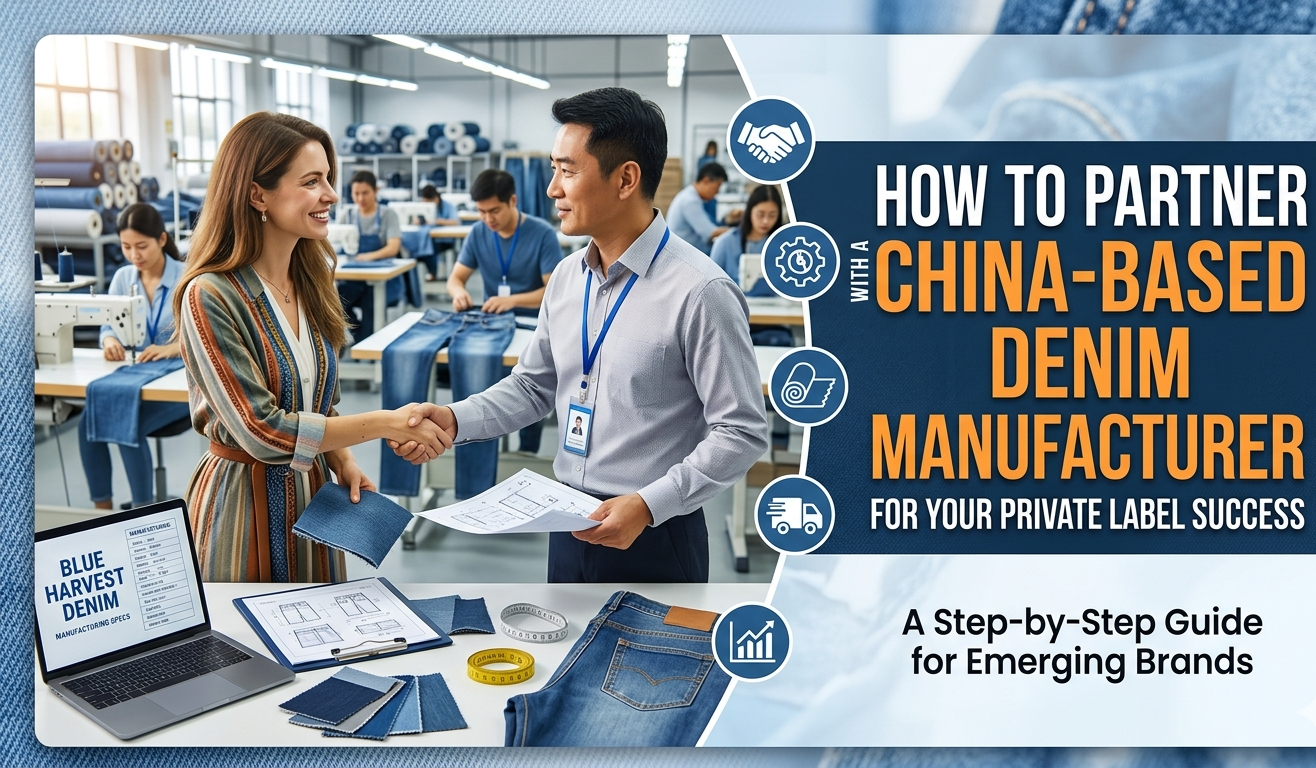
Finding a denim supplier in China is just a Google or Alibaba search away. However, finding a reliable manufacturing partner who actually understands pattern engineering, wash consistency, and e-commerce return rates is the difference between a profitable private label and a warehouse full of dead inventory.
Many independent brands and apparel importers struggle with overseas production because they approach factories without understanding the industrial manufacturing process.
At Xinen Garment, we engineer custom jeans, denim jackets, and apparel for B2B wholesalers, Amazon FBA sellers, and Shopify brands worldwide. If you are looking to scale your private label with a China-based denim manufacturer, here is the direct, factory-floor guide on how to establish a successful partnership.
What Must You Prepare Before Contacting a Denim Factory?
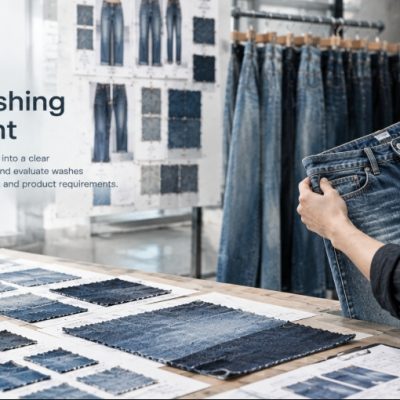
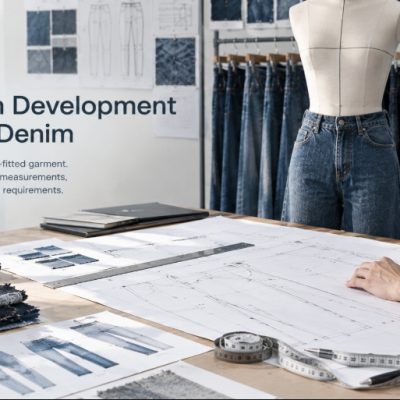
Before contacting a factory, you must prepare a comprehensive Tech Pack that includes your Bill of Materials (BOM), Point of Measure (POM) grading rules, and precise reference photos for the wet processing (wash).
If you approach a factory with just a photo and ask, “How much to make this?”, you are signaling that you are an amateur. Professional factories quote based on data.
- The BOM (Bill of Materials): Specify the exact fabric weight (e.g., 12oz or 14oz), composition (e.g., 100% Cotton or 98% Cotton/2% Elastane), and hardware requirements (copper rivets, YKK zippers).
- Target CPU (Cost Per Unit): Be transparent about your target manufacturing cost and retail price point. A good factory will engineer the garment to meet your budget by adjusting the fabric source or wash complexity.
How Do You Tell a Direct Factory from a Trading Company?
You can identify a direct factory by asking highly technical questions about denim shrinkage rates, CAD pattern grading, and wash lab limitations. A direct factory will answer mathematically, while a trading company will delay and “check with the engineer.”
Working with a trading company adds a 20% to 30% hidden markup to your production costs. To protect your margins:
- Ask for Technical Adjustments: During a video call, ask how they adjust the inseam pattern for a heavy acid wash versus a clean rinse. A real factory pattern maker knows that heavy washing requires a larger shrinkage allowance in the initial cut.
- Demand Visual Proof: Request a video tour of their cutting tables, sewing lines, and most importantly, their in-house wash lab. If they outsource the wet processing, your bulk orders will suffer from inconsistent vintage fades.
How Does the Denim Sampling Process Actually Work?
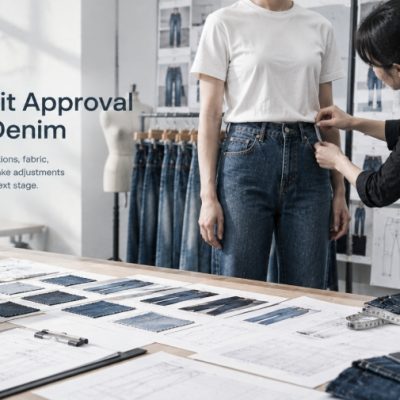
The industrial denim sampling process works in two distinct stages: the Fit Sample (to test the CAD pattern and sizing) and the Pre-Production Sample (to finalize the vintage wash, hardware, and fabric drape).
Do not expect the first sample to be flawless. Denim is a highly variable material.
- Phase 1: The Fit Sample. We cut your design using available stock fabric. The goal here is purely to test the mathematical grading. Do the hips fit? Is the front rise correct?
- Phase 2: The Pre-Production (PP) Sample. Once the fit is approved, we create the PP sample using your actual bulk fabric. This sample undergoes the exact chemical washing and hand-sanding processes your bulk order will receive. Once you approve the PP sample, the factory locks in the standard for bulk production.
What Are Realistic MOQs and Lead Times for Custom Denim?
A realistic Minimum Order Quantity (MOQ) for custom-engineered denim is typically 100 to 300 pieces per style and wash, with an average bulk production lead time of 30 to 45 days after PP sample approval.
- The Low MOQ Trap: If a supplier offers an MOQ of 20 pieces for “custom denim,” they are likely taking cheap, pre-made blank jeans and just sewing your label on them (White Labeling). True custom cut-and-sew manufacturing requires cutting fresh fabric rolls, which necessitates a minimum of 100-300 pieces to run the factory line efficiently.
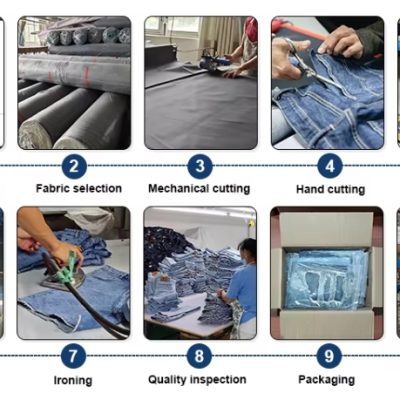
- Factoring in Wet Processing: Denim takes longer to produce than basic t-shirts because of the wash lab. High-contrast whiskers, pumice stone tumbling, and industrial drying add significant time to the production schedule.
Why Choose Xinen Garment as Your Manufacturing Partner?
At Xinen Garment, we do not just operate sewing machines; we operate as an extension of your brand’s supply chain. We provide end-to-end technical manufacturing for high-end boutiques and fast-scaling e-commerce brands.
- Direct Factory Pricing: We eliminate trading company middlemen, providing you with transparent costing and direct communication with the production floor.
- In-House Technical Engineering: Our CAD pattern makers and wash lab technicians ensure that your sizing remains strictly consistent, actively lowering your customer return rates on platforms like Amazon and Shopify.
- Scalable Production: We support emerging brands with practical MOQs (starting at 100-300 pieces) while possessing the industrial capacity to scale up to tens of thousands of units for wholesale importers.
- E-Commerce Ready: We handle all final-mile preparations, including custom branded poly-bagging, strict moisture-control packaging (desiccants), and Amazon FNSKU barcoding.
Frequently Asked Questions (FAQ)
Q: Should I source my own denim fabric or let the factory do it?
A: Unless you are a massive corporation with your own textile supply chain, you should always let the factory source the fabric. A professional manufacturer like Xinen Garment has established relationships with top mills and can secure better pricing, consistent dyeing, and guaranteed quality control on the raw materials.
Q: What happens if the bulk order doesn’t match the PP sample?
A: A reliable factory operates on strict Quality Control (QC) tolerances. If the factory makes an error that exceeds the agreed-upon measurement or wash tolerances, they are responsible for fixing or replacing the garments. Always define these tolerances in your manufacturing agreement.
Q: Can Xinen Garment help me create a Tech Pack?
A: Yes. If you only have physical reference samples or detailed sketches, our technical team can help reverse-engineer the garment and draft a professional CAD pattern and Tech Pack to begin the sampling process.
Q: How do we handle shipping from China to my warehouse?
A: We assist with full logistics coordination. Depending on your margins and timeline, we can organize EXW, FOB, or DDP shipping via ocean freight (for bulk) or air freight (for urgent drops) directly to your 3PL or Amazon FBA warehouse.