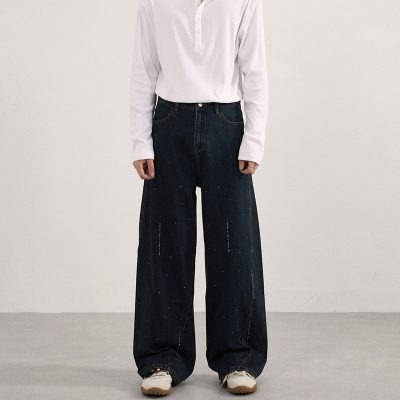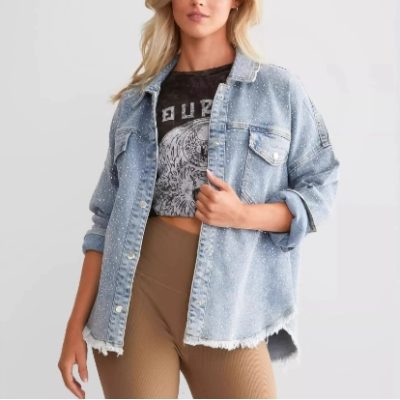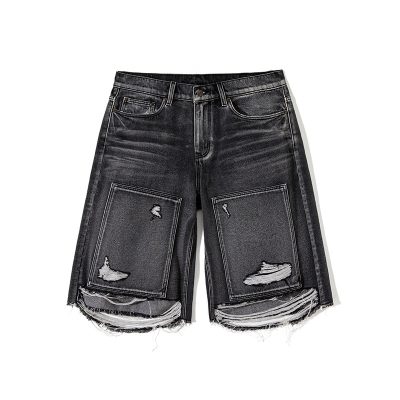
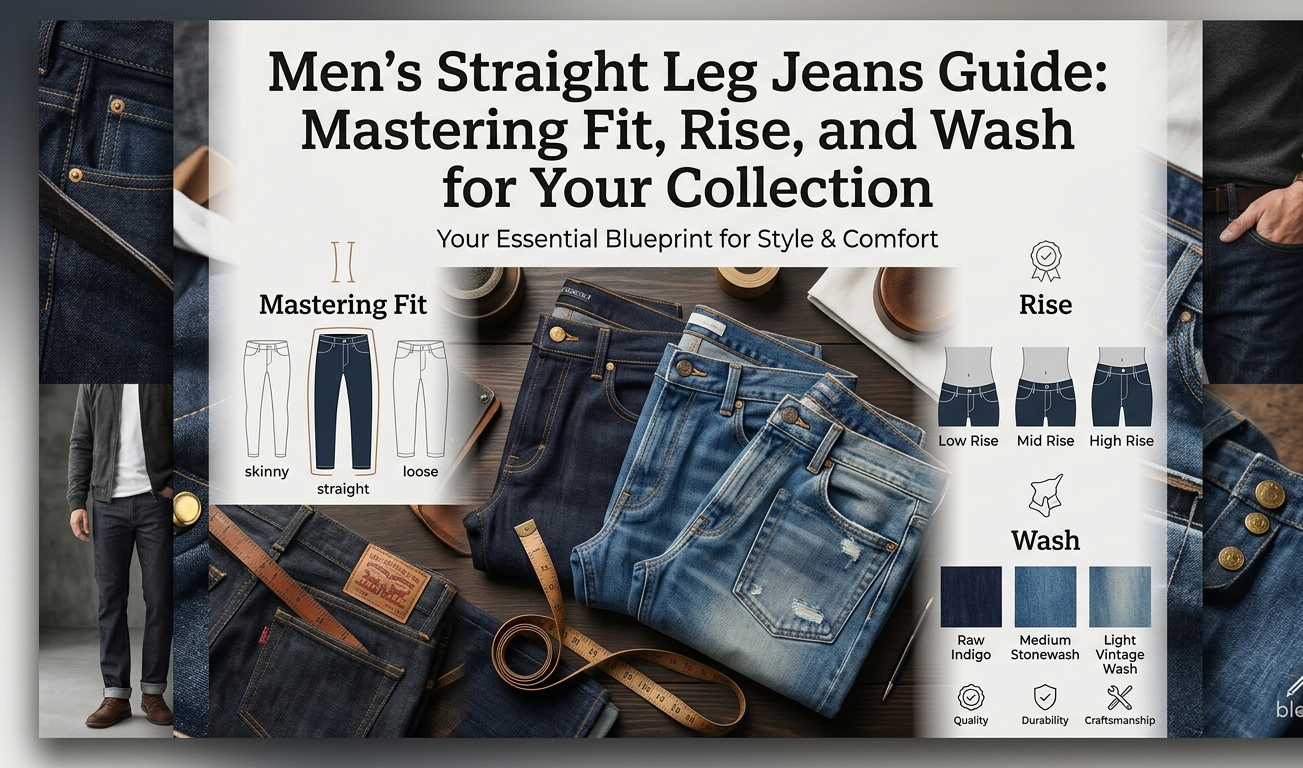
For apparel importers and e-commerce brand owners, the men’s straight-leg jean is more than a style—it is a commercial anchor. While skinny or oversized trends fluctuate, the straight-leg silhouette provides a stable ROI due to its universal appeal and lower sizing-related return rates.
At Xinen Garment, we engineer custom denim for global B2B clients from our manufacturing facility in Foshan. Understanding the technical nuances of fit, rise, and wash is essential for building a collection that balances aesthetic appeal with manufacturing efficiency.
1. The Fit: Understanding the Technical Column
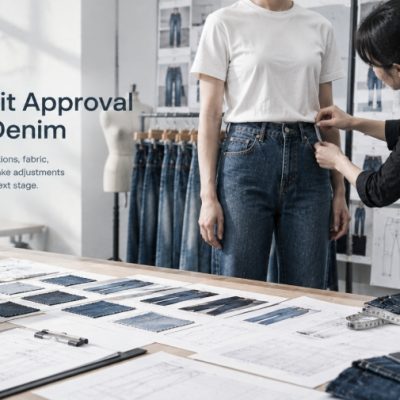
In a professional CAD pattern, a “true straight” fit is defined by its verticality. Unlike tapered or bootcut styles, the Point of Measure (POM) at the knee is nearly identical to the POM at the leg opening.
- The Silhouette: The fabric drops in a consistent column from the knee down, accommodating various body types without clinging to the calves.
- Fabric Choice: To maintain this architectural shape, we recommend 12oz to 14oz heavyweight denim. Lighter fabrics often lack the structural integrity to hold a clean vertical line.
- Stretch vs. Rigid: While 100% rigid cotton is the gold standard for heritage brands, a 1% to 2% elastane blend is a strategic choice for Amazon or Shopify sellers to provide a “sizing buffer” for the end consumer.
2. The Rise: Engineering Comfort and Demographic Appeal
The “Rise”—the distance from the crotch seam to the top of the waistband—dictates how the jean sits on the hips and greatly influences the target demographic.
| Rise Type | Measurement Detail | Target Demographic |
| Low Rise | Sits below the hip bone. | Trend-driven, Y2K-inspired, or youth streetwear. |
| Mid Rise | The commercial standard (approx. 9–11 inches). | The “Safe Zone” for B2B brands; appeals to the broadest age range. |
| High Rise | Sits at or above the navel. | Heritage, retro-vintage, or comfort-focused workwear. |
3. The Wash: Balancing Aesthetics with Production Cost
The wash is where the “personality” of the jean is created, but it also impacts your Bill of Materials (BOM) and lead times.
- Clean & Raw: These require minimal wet processing, offering the fastest production turnover and highest color consistency across bulk batches.
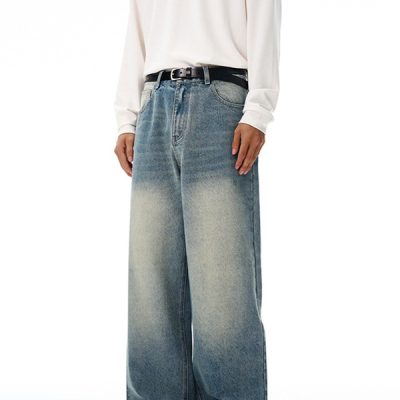
- Vintage Enzyme Wash: This involves using pumice stones and enzymes to replicate years of wear. It is the fastest-growing trend for 2026, offering a higher perceived value for premium brands.
- Acid & Distressed: These labor-intensive processes involve manual hand-sanding and localized chemical abrasion. While they command higher retail prices, they require longer lead times in the wash lab.
Why Choose Xinen Garment for Your Denim Production?
Successfully launching a men’s straight-leg line requires a manufacturer that understands the technicalities of international procurement and B2B scale.
- China-Based Expertise: We are located in China’s premier garment and hardware manufacturing hub, offering direct factory access without trading company markups.
- Technical Fit Mastery: Our CAD engineers specialize in managing fabric shrinkage and pattern balancing to ensure your straight-leg remains a “true straight” after industrial washing.
- Startup-Friendly Scaling: We support emerging private labels with practical Minimum Order Quantities (MOQs), typically starting at 100–300 pieces per style.
- E-Commerce Ready: We provide full B2B support, including custom branded hardware, moisture-control packaging, and Amazon-compliant FNSKU barcoding.
Frequently Asked Questions (FAQ)
Q: Which rise is best for a new Amazon FBA brand?
A: We almost always recommend a Mid-Rise. It is the most universally flattering and carries the lowest risk of fit-related returns compared to low or high-rise styles.
Q: Does a 100% cotton straight jean shrink after the first wash?
A: All denim shrinks. However, at Xinen Garment, we perform rigorous wash-tests on fabric swatches and digitally expand our patterns to compensate for shrinkage before the bulk cut.
Q: Can I achieve a vintage look on lightweight 10oz denim?
A: It is difficult. Heavy vintage washing involves abrasion that can weaken thin fibers. For an authentic vintage look, we recommend at least a 12oz fabric weight.
Q: How do I communicate my desired wash in a Tech Pack?
A: We recommend providing a physical reference sample or a high-resolution photo. Our in-house wash lab can then replicate the specific indigo shade and whiskering patterns for your approval.