
As utility wear continues to dominate menswear in 2026, the men’s cargo denim jean has transitioned from a niche streetwear item into a primary category for wholesale buyers and private labels. However, manufacturing a cargo jean is significantly more complex than producing a standard five-pocket straight leg.
For brands preparing to launch a cargo denim collection, understanding what retail buyers and end-consumers actually evaluate is critical. Success in this category depends on structural engineering, functional hardware, and precise wash treatments. Here is a technical breakdown of what the market demands in 2026 and how to address these factors in your pre-production planning.
1. Engineered Relaxed Fits and Pattern Balance
In 2026, the market has completely moved away from skinny or slim cargo pants. Consumers expect relaxed, wide, or straight-leg silhouettes that provide mobility and a substantial drape.
- Side Seam Integrity: Adding large, heavy cargo pockets to the side of a pant alters how the garment hangs. If the pattern is not engineered correctly, the weight of the pockets will drag the outseam forward, causing the leg to twist. Your manufacturing partner must balance the front and back panels to support the additional structural weight.
- Articulated Knees: Premium buyers look for ergonomic details. Implementing knee darts or articulated seams allows the heavy denim fabric to bend naturally without bunching, adding high retail value to the garment.
2. Functional Pocket Construction and Reinforcement
A cargo jean is judged entirely by its pocket detailing. Decorative pockets that cannot hold items without tearing indicate poor manufacturing quality. Brands must specify industrial-grade construction for all utility elements.
- Gusseted vs. Flat Pockets: 3D gusseted pockets (bellows pockets) expand to hold items and offer a rugged, tactical aesthetic. Flat patch pockets provide a cleaner, more streamlined look. Whichever style you choose, the placement must be proportionate across all sizes during the grading process.
- Heavy-Duty Bartacking: Every corner of a cargo pocket and every flap joint must be reinforced with automated bartack stitching. This prevents the heavy denim from ripping under tension.
- Secure Closures: Buyers expect reliability. Pocket flaps should be secured using hidden brass snap buttons, heavy-duty metal zippers, or commercial-grade hook-and-loop fasteners. Standard plastic buttons fail quickly on heavy denim.
3. Fabric Selection and Over-Dyed Wash Profiles
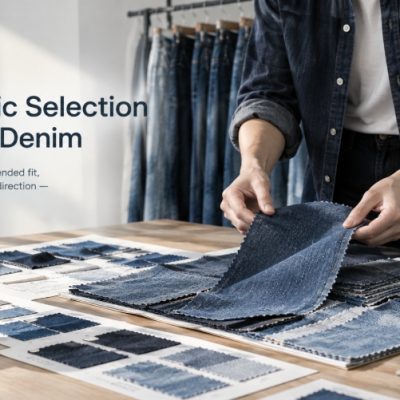
Cargo jeans require fabrics that combine durability with a comfortable break-in period. Furthermore, the 2026 market favors specific color profiles that merge utility wear with vintage denim aesthetics.
- Mid-to-Heavyweight Denim: Specify a fabric weight between 12oz and 14oz. Lightweight denim will buckle under the weight of the cargo pockets and hardware. A 100% cotton rigid denim provides authentic structure, while a 98% cotton / 2% spandex blend offers necessary flexibility for wider cuts.
- Earth-Tone Tinting and Over-Dyeing: Beyond standard indigo washes, buyers are actively sourcing cargo denim in utility colors. Ask your factory about over-dyeing processes to achieve vintage black, faded olive, or applying brown/yellow sulfur tints over a stone-washed indigo base for a muddy, rugged appearance.
4. Why Partner with Xinen Garment for Cargo Denim Production
At Xinen Garment, we possess the technical capabilities required to manufacture complex utility denim. We support apparel importers, wholesale distributors, and private labels with precision OEM and ODM production.
- Advanced Pattern Engineering: Our technical pattern makers ensure your cargo jeans maintain their intended silhouette, properly balancing the outseams and grading the pocket dimensions proportionally across your entire size run.
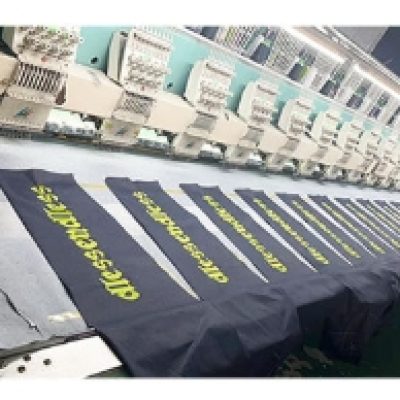
- Heavy-Duty Sewing Lines: Cargo pants require industrial strength. Our production floors are equipped with heavy-duty sewing machines capable of stitching through multiple layers of heavy denim, executing clean 3D pocket constructions and dense bartack reinforcements.
- Hardware and Trim Sourcing: We source and install heavy-duty brass snaps, custom-molded zippers, and industrial rivets that match the rugged requirements of utility wear.
- Specialized Laundry Control: Our wash facilities handle complex tinting, over-dyeing, and stone-washing processes, ensuring your cargo collection achieves the exact vintage or utility aesthetic specified in your tech pack.
5. Frequently Asked Questions (FAQ)
Does adding multiple cargo pockets increase the production lead time?
Yes, complex pocket configurations increase the sewing time per garment. Depending on the design (e.g., 3D bellows pockets with zipper closures), the bulk production lead time may require an additional 5 to 7 days compared to a standard five-pocket jean.
Can we customize the shape and placement of the cargo pockets?
Absolutely. We work directly from your tech packs and vector files. You can dictate the exact pocket dimensions, flap angles, pleat depths, and placement on the thigh or calf.
What is the minimum order quantity (MOQ) for custom over-dyed cargo jeans?
Because over-dyeing and specialized tinting require specific wash bath minimums, the MOQ is typically evaluated based on the wash recipe complexity. Please submit your design specifications to our sales team for an accurate volume assessment.
How do you prevent the pocket flaps from curling after washing?
We fuse a layer of industrial interfacing (a stabilizing fabric) inside the pocket flaps before sewing. This ensures the flaps remain flat and crisp, even after heavy enzyme or stone washing.