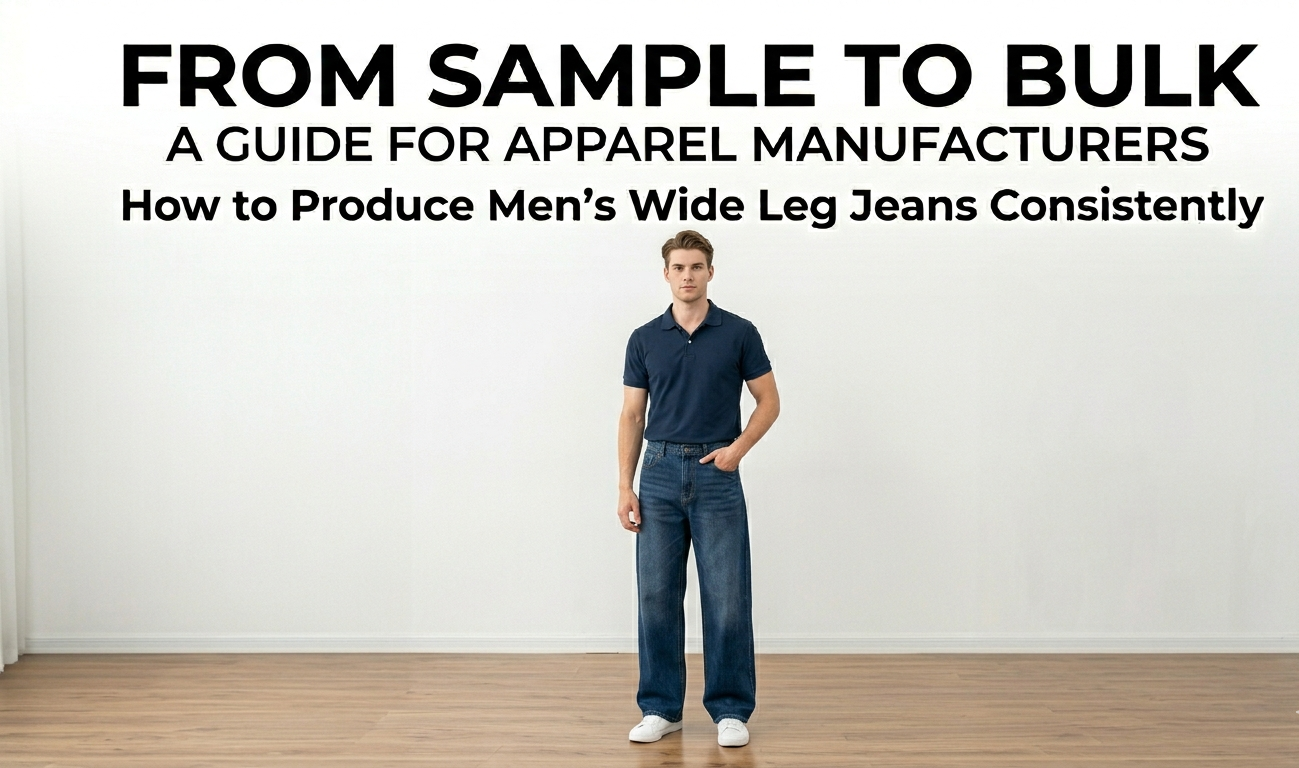
Transitioning from a flawless pre-production sample (PPS) to a bulk run of thousands of units introduces significant production variables. For clothing importers, wholesalers, and private labels, the primary risk during this scaling phase is consistency drift—where the bulk shipment fails to match the approved sample in fit, drape, or wash finish.
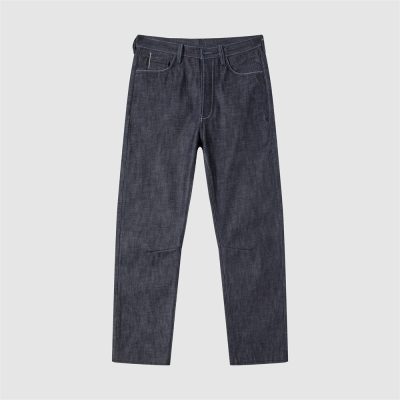
Because men’s wide-leg jeans utilize larger fabric panels and place distinct demands on fabric structure, factories must implement rigorous technical controls to ensure consistency from the first sample to the final bulk delivery.
How Do Fabric Batch Variances Affect Bulk Wide-Leg Denim?
Denim is a natural cotton textile, meaning that different yarn lots and dye batches from the textile mill can vary slightly in weight, density, and weave tension. In a slim or straight-cut jean, minor fabric variances are often masked by the garment’s proximity to the body. In a wide-leg silhouette, however, the fabric hangs completely away from the body; any unexpected change in fabric stiffness or drape will alter how the entire silhouette looks on the shelf and on the consumer.
To maintain consistency, the factory must execute a incoming material inspection for every bulk fabric shipment. The rolls must be grouped by dye lot and tested to ensure the fabric weight (typically between 12oz and 14oz for a premium wide-leg) remains uniform across the entire cutting order.
Why Is Lot-Specific Shrinkage Testing Mandatory Before Bulk Cutting?
Wide-leg jeans use a high volume of fabric per garment, making them highly vulnerable to industrial wash shrinkage. A 2% or 3% calculation error on a slim-fit leg opening might escape a buyer’s notice, but the same error on a wide, 22-inch leg opening can cause a noticeable distortion in the silhouette’s line or dramatically alter the inseam length.
Before the bulk fabric is laid out on the cutting tables, production teams must cut a 1×1 meter testing square from the actual production lot. This swatch is put through the exact chemical and heat parameters of the approved wash recipe (such as an enzyme or vintage stone wash). The precise warp and weft shrinkage values are then fed back into the CAD software to automatically adjust the bulk cutting patterns.
How Do Industrial Sewing Templates Prevent Fit Drift in the Assembly Line?
During bulk sewing, individual operator variations can lead to structural inconsistencies. On a wide-leg jean, the contrast between a secure, fitted waist (the top block) and a voluminous leg is critical. If an operator miscalculates a seam allowance by even a fraction of an inch along the long outseam, the total circumference of the leg changes.
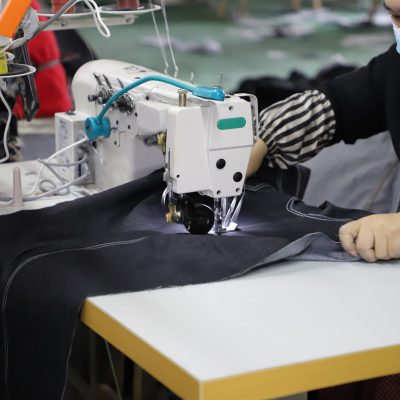
To eliminate human error, professional factories utilize rigid acrylic sewing templates and automated machinery for critical construction points, such as pocket placement, front fly construction, and waistband attachment. Furthermore, maintaining a uniform Stitch Per Inch (SPI) count of 8 to 10 stitches on heavy-duty chain-stitch machines ensures the long side seams retain optimal tensile strength without puckering during the wash process.
How Is Wash and Shade Uniformity Controlled in Multi-Batch Laundry Runs?
Industrial laundry machines process bulk garments in separate loads or “drums,” typically handling 100 to 200 pairs at a time. Minor fluctuations in water temperature, cycle duration, or chemical concentrations can cause shade variations between the first batch washed in the morning and the last batch washed at night.
Factories control this by using automated chemical dispensing systems that ensure identical wash recipes are applied to every load. Following the wash process, quality control teams use standardized lighting boxes to perform shade banding, grouping the finished jeans to ensure that any slight, unavoidable natural indigo variations remain within a strictly defined commercial tolerance before packing.
Why Choose Xinen Garment for Bulk Denim Production?
Sustaining consistency across large-scale orders requires an experienced, direct-to-factory partner who understands the technical nuances of denim engineering. Xinen Garment specializes in manufacturing custom denim apparel for B2B clients, prioritizing operational accuracy over shortcuts.
- CAD-Integrated Pattern Controls: We utilize advanced CAD grading systems that isolate the fit of the top block from the leg expansion, ensuring your wide-leg silhouettes maintain exact proportions from size 30 up to size 40.
- In-House Wash Replication: Our technical wash facility performs exact lot testing for shrinkage and color matching before bulk production begins, mitigating the scaling risks commonly faced by private labels.
- Transparent B2B Quality Management: We maintain clear tolerances and data-driven quality checks throughout the cutting, sewing, washing, and finishing stages, ensuring your bulk inventory matches your approved pre-production sample.
Frequently Asked Questions (FAQ)
What is the standard measurement tolerance between the approved sample and bulk garments?
The standard industry tolerance for denim bulk production is typically +/- 0.5 inches (+/- 1.2cm) on critical points such as the waist, rise, and inseam. Our pre-shrunk pattern adjustments are designed to keep bulk garments strictly within this window.
Can we apply different wash styles to the same bulk fabric order?
Yes, but each wash style requires its own independent shrinkage testing and pattern adjustment. A heavily distressed vintage wash will shrink fabric differently than a simple dark indigo rinse, so separate CAD patterns must be utilized for each finish.
How do you prevent the wide leg openings from fraying during bulk shipping?
We use industrial double-turn hems secured by specialized chain-stitching. Once the wash process is completed, every garment undergoes a final pressing and thread-trimming stage, and jeans are packed in moisture-resistant polybags to protect the heavy fabric panels during international transit.
What is the production lead time for a bulk order of wide-leg jeans?
Once the pre-production sample is approved and bulk fabric is validated, our standard bulk production timeline ranges from 30 to 45 days, depending on the complexity of the wash finish and the total order volume.