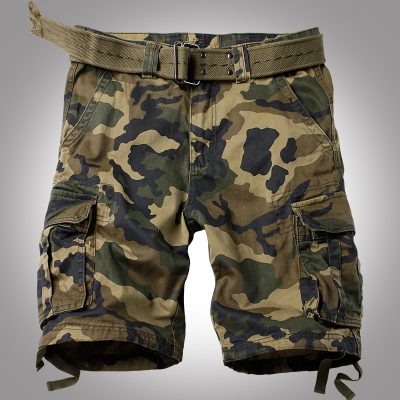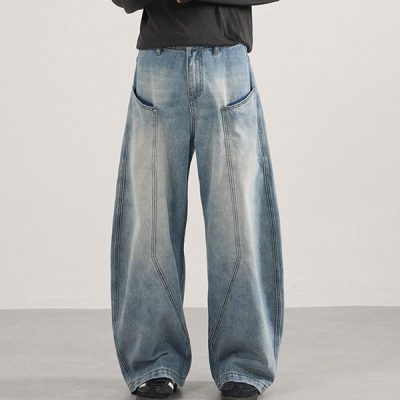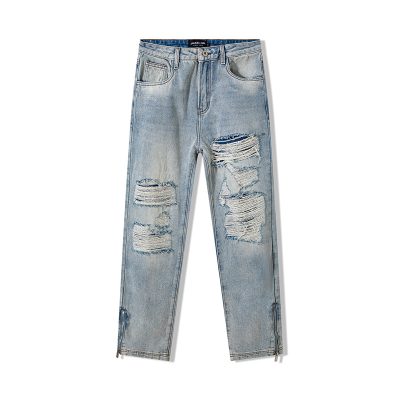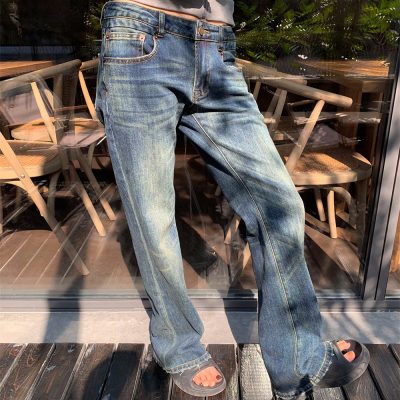
The market for men’s wide-leg jeans has shifted from a fast-fashion trend into a stable, volume-driving category for global apparel brands. In 2026, sourcing managers, importers, and private labels are no longer asking if they should stock wide-leg silhouettes; instead, they are focused on how to refine the technical execution of these garments to meet stricter consumer expectations.
As the market matures, buyers are looking for structural longevity, cleaner drapes, and verifiable production compliance. This guide outlines the essential manufacturing criteria that professional B2B buyers prioritize when selecting custom wide-leg denim lines this year.
Why Is Sustainable Fabric Structure the First Check for 2026 Sourcing?
In 2026, global import regulations and consumer demand have forced a closer inspection of textile composition. However, wide-leg jeans present a unique challenge: the fabric must meet eco-standards without losing the physical weight required to hold the silhouette.
- The Weight Imperative: Buyers avoid thin fabrics for wide cuts. A premium, modern wide-leg requires a 12oz to 14oz mid-to-heavyweight denim. Anything lighter causes the fabric to collapse, cling to the wearer’s leg, and look cheap on retail hangers.
- Composition Realities: While 100% organic cotton rigid denim remains the benchmark for authentic vintage styles, many commercial brands now look for blends containing recycled cotton or Tencel to meet sustainability goals. The technical requirement here is maintaining a tight weave tension so that these eco-blends emulate the structure of traditional rigid denim.
How Do Evolving Pattern Grading Rules Dictate Modern Wearability?
The “baggy” fits of previous seasons have evolved into what designers call “clean volume.” 2026 retail consumers demand wide-leg jeans that look intentional rather than oversized.
- Isolated Top-Block Fits: Sourcing agents look closely at how a factory grades sizes. The waist, upper seat, and crotch must retain a structured, relatively tailored fit. If a factory simply scales up a pattern uniformly, the jeans become unwearable at the waist when scaled to larger sizes.
- Controlled Leg Openings: Leg openings are stabilizing between 19 and 22 inches for commercial collections. This width delivers the desired fluid profile while ensuring the hem does not drag excessively on the ground or hide the footwear entirely, a common point of consumer returns in e-commerce.
What Wash Technologies Are Mandatory for Global Compliance?
Chemical and water regulations in major import regions have made traditional, heavy-chemical denim washing a liability for international buyers. Wash houses must utilize modern, low-impact processes.
- Laser and Ozone Dominance: Buyers look for manufacturers that replace traditional potassium permanganate (PP) spraying and intensive stone washing with laser distressing and ozone fading. These technologies replicate authentic vintage whiskers and fades with a fraction of the water and zero hazardous chemical discharge.
- Shade Consistency Across Batches: Because wide-leg jeans display large panels of flat color, any variance in shade across a production lot is highly visible. Buyers require automated laundry setups that guarantee identical color matching from the first production drum to the last.
Why Choose Xinen Garment for Your 2026 Custom Denim Line?
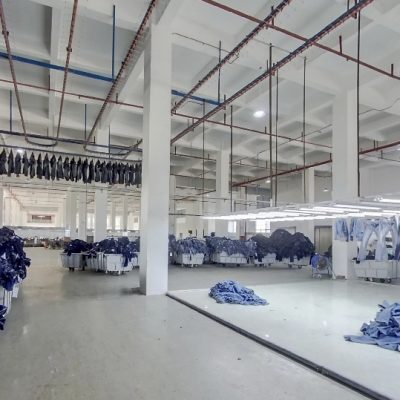
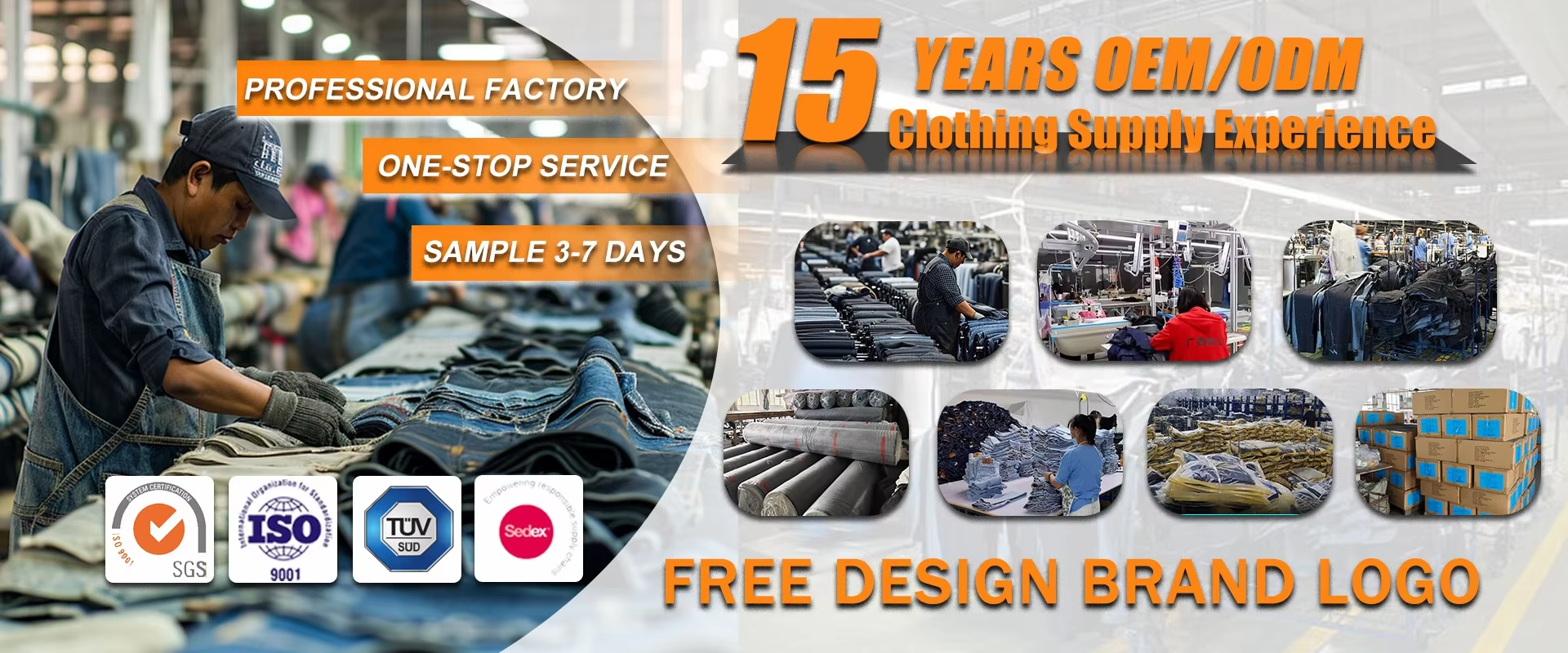
Operating from a position of technical specialization, Xinen Garment delivers reliable, retail-ready production runs for apparel importers, wholesalers, and private labels. We understand the precise requirements of modern B2B denim procurement.
- Advanced CAD Pattern Control: Our technical pattern makers specialize in modern men’s silhouettes. We engineer custom wide-leg, straight, and cargo blocks that keep the waist secure while grading the leg width proportionally across all sizes.
- Compliant Wash Facility: We utilize efficient enzyme, ozone, and laser wash processing. This allows us to achieve high-demand vintage, mid-blue, and washed-black aesthetics while strictly adhering to global environmental and quality standards.
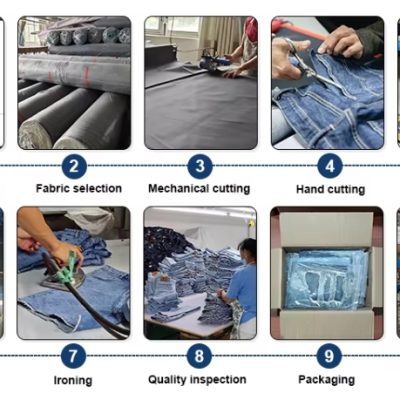
- Data-Driven Quality Assurance: From checking the vertical grain line alignment before fabric cutting—which prevents the leg seams from twisting—to testing batch-specific shrinkage rates, we ensure your bulk shipment matches your approved sample exactly.
Frequently Asked Questions (FAQ)
What is the standard production timeline for a wide-leg denim order?
Our sample development cycle takes 7 to 14 days once the tech pack and fabric are verified. Bulk production typically requires 30 to 45 days, depending on the volume and the complexity of the wash finish.
How does Xinen Garment prevent wide-leg jeans from twisting after retail washes?
Leg twist occurs when fabric is cut off-grain. Our cutting room teams strictly align patterns with the vertical warp threads of the denim. We also recommend utilizing pre-skewed fabrics for bulk production to eliminate the natural rotational pull of twill weaves.
Can you adjust measurements specifically for US or EU sizing standards?
Yes. We do not use generic sizing templates. We construct independent CAD grading rules based on your specific regional target demographics, ensuring proper rise, waist, and inseam proportions for your market.
What parameters do you use to verify bulk wash consistency?
We establish a physical “wash standard” sample approved by your team. During bulk production, finished garments are checked against this standard under standardized lighting boxes (D65 light sources) to manage shade banding and keep coloration within acceptable commercial tolerances.