Designing a denim jacket collection is not just about creating good-looking products.
For most apparel brands, the real challenge is building a collection that is coherent, commercially viable, and production-friendly.
Many collections fail not because of poor design, but because they lack structure — too many random styles, unclear positioning, or unrealistic pricing.
This guide explains how to design a denim jacket collection that not only looks good, but also works in the market.
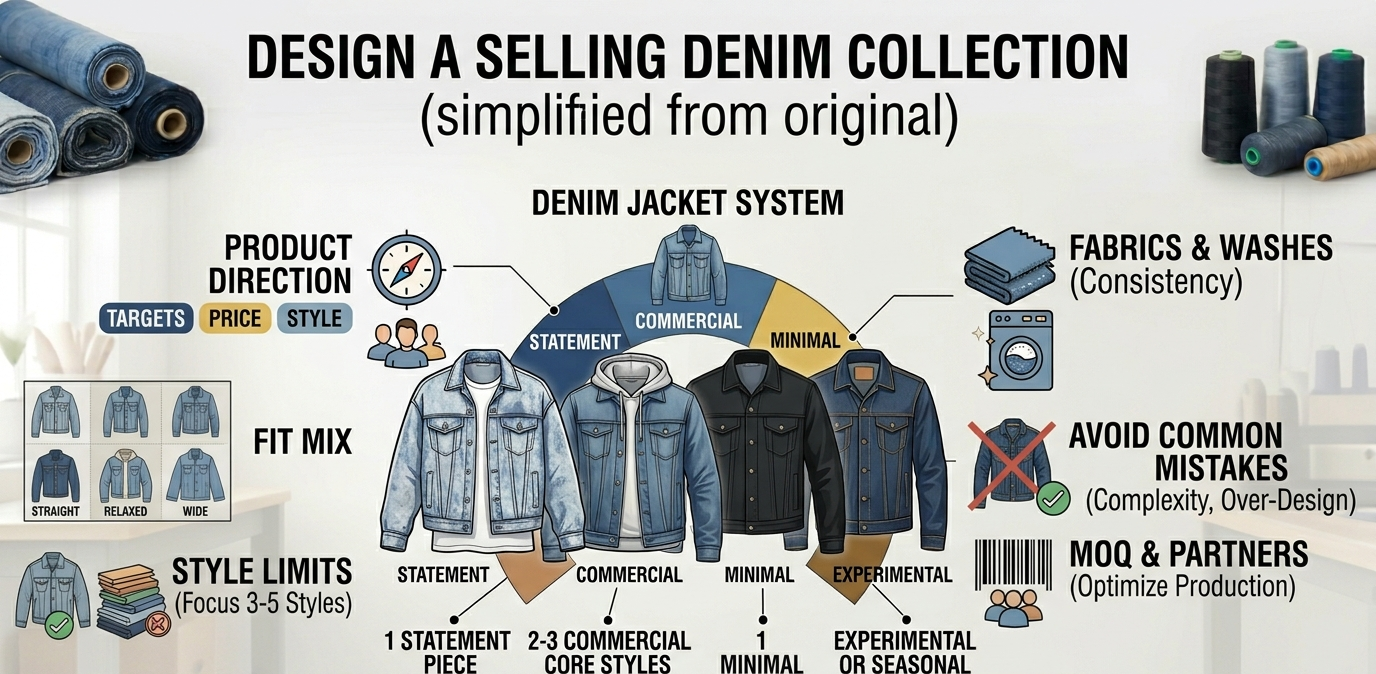
Start with a Clear Product Direction
Before sketching any designs, define your direction.
Ask:
- Who is your target customer?
- What price range are you aiming for?
- Is your brand more streetwear, casual, or premium?
For example:
- streetwear brands → oversized, washed, statement pieces
- commercial brands → balanced fits, easy-to-wear styles
- premium brands → clean finishes, minimal design
Without this clarity, collections often feel inconsistent.
Limit the Number of Core Styles
A common mistake is designing too many styles at once.
A more effective approach is to focus on 3–5 key styles:
- 1 statement piece (e.g., oversized jacket)
- 1–2 core commercial styles
- 1 clean / minimal option
- 1 experimental or seasonal design
This structure helps control cost and keeps the collection focused.
Choose the Right Fits for Your Market
Fit plays a major role in whether a product sells.
Common options:
- oversized / boxy fit
- regular fit
- slightly relaxed fit
Oversized jackets are popular in streetwear, but not every customer prefers them.
Including a mix of fits helps reach a wider audience.
Select Fabrics That Match Your Positioning
Fabric choice affects both price and perception.
Typical options:
- 10oz–12oz denim → lighter, more comfortable
- 12oz–14oz denim → structured, premium feel
Also consider:
- rigid vs stretch denim
- cotton quality
- sustainability (increasingly important in Western markets)
Fabric should align with your target price and brand positioning.
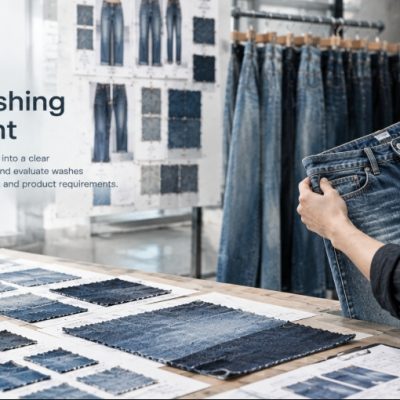
Define a Clear Washing Direction
Washing is one of the most visible aspects of denim jackets.
Instead of mixing too many styles, define a direction:
- vintage / light wash
- clean / minimal
- distressed / streetwear
Consistency in washing helps create a recognizable collection.
Balance Design and Cost
Design decisions directly impact production cost.
Key cost drivers:
- fabric quality
- washing complexity
- trims and custom details
- order quantity
For example:
- heavy distressing increases cost
- custom hardware adds up quickly
A good collection balances visual impact with realistic production cost.
Build Around Styling, Not Just Individual Pieces
A strong collection works as a system.
Think about how jackets pair with:
- denim jeans
- denim shorts
- hoodies or T-shirts
This makes your collection easier to market and sell.
Plan MOQ and Production Early
MOQ (minimum order quantity) affects both design and pricing.
Typical MOQ:
- 200–500 pieces per style
Designing too many styles with low quantities can increase cost significantly.
Planning production early helps avoid last-minute adjustments.
Work with Your Manufacturer During Development
Many brands treat manufacturers only as production partners.
In reality, involving them early can help:
- optimize design for production
- reduce unnecessary costs
- improve fit and construction
This is especially important for denim jackets, which are more complex than basic garments.
Common Mistakes to Avoid
Too many styles
Leads to higher cost and weaker product focus.
Inconsistent design direction
Mixing styles without a clear theme confuses customers.
Over-designing
Too many details do not always improve sales.
Ignoring fit
Even a well-designed jacket will not sell if the fit is off.
Key Takeaway: Design with Both Style and Reality in Mind
A denim jacket collection that sells is not just creative — it is structured.
Brands that succeed usually:
- define a clear direction
- focus on a limited number of styles
- balance design with cost
- think about production from the beginning
This approach reduces risk and improves overall product performance.
Looking to Develop a Denim Jacket Collection?
If you are planning to design and produce denim jackets, working with an experienced custom denim manufacturer can help bring your ideas into production more efficiently.
At Xinengarment, we support brands with:
- denim jacket design development
- private label production
- flexible MOQ options
Feel free to reach out to discuss your project.
FAQ
How many styles should a denim jacket collection include?
Most brands start with 3–5 core styles to keep the collection focused and cost-efficient.
What is the best fit for denim jackets in 2026?
Oversized and relaxed fits are trending, especially in streetwear. However, including a regular fit option helps reach a broader market.
How do I choose the right fabric for denim jackets?
Fabric choice depends on positioning. Mid-weight denim (10oz–14oz) is commonly used, with heavier fabrics offering a more premium feel.
What washes work best for denim jackets?
Popular options include vintage wash, light wash, and clean finishes. Overly complex distressing is becoming less common in premium markets.
What is the MOQ for denim jacket production?
MOQ typically ranges from 200 to 500 pieces per style, depending on customization and fabric sourcing.
How do I price a denim jacket collection?
Pricing depends on production cost, brand positioning, and target margin. Understanding cost structure early helps set realistic pricing.
How long does it take to develop a denim jacket collection?
Development usually takes 6–10 weeks including sampling and production.
Should I start with complex designs?
It is usually better to start with simpler designs and refine based on market feedback.
Can small brands produce denim jackets?
Yes, but they need to plan carefully around MOQ and cost. Starting with fewer styles is more practical.
What is the biggest mistake when designing denim jackets?
Lack of clear direction and over-designing are two of the most common issues.