For apparel importers, wholesalers, and private labels, selecting the foundational silhouettes for a denim collection is a strategic financial decision. While fashion trends dictate consumer demand, factory-level production realities dictate profit margins and return rates.
Currently, the market is divided between two major silhouettes: the classic straight leg and the relaxed wide leg. Both styles offer distinct advantages regarding manufacturing complexity, fabric consumption, and market demographic reach. This guide compares straight and wide-leg denim from a technical production perspective to help you determine the optimal mix for your brand.
What Are the Structural and Pattern Differences in Manufacturing?
From a pattern-making and cutting perspective, straight-leg and wide-leg jeans require entirely different engineering rules to ensure proper retail fit.
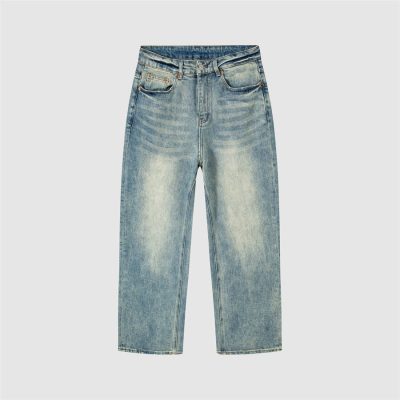
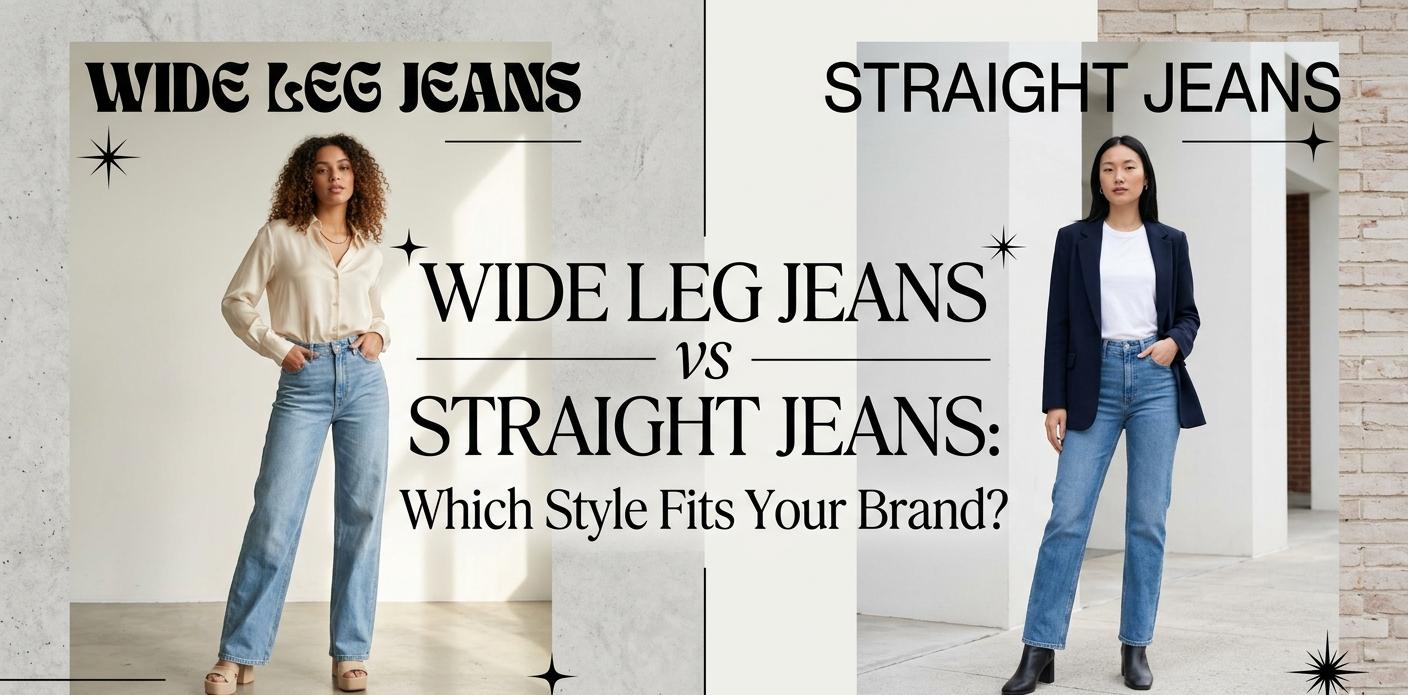
- Straight Leg Jeans: This silhouette maintains a uniform width from the knee down to the hem opening, typically ranging from 14 to 17 inches in total circumference. Because it follows the natural line of the leg more closely, pattern grading is straightforward. It accommodates both 100% cotton rigid denim and stretch denim formulations (such as 98/2 cotton-elastane blends) easily.
- Wide Leg Jeans: This fit features a significantly wider leg circumference, usually between 19 and 23 inches. The core technical challenge here is pattern balance. If a factory simply increases the pattern width across the board, the waist and seat will become loose, creating an unwearable garment. The pattern maker must isolate the “top block” (waist and upper hips) to keep it tailored, initiating the widening angle smoothly from the lower hip or mid-thigh.
How Do Fabric Consumption and Production Costs Compare?
Fabric yield is a primary driver of your Garment Manufacturing Cost (CMT). The choice of silhouette directly impacts your marker efficiency in the cutting room.
- Fabric Yield Variance: Wide-leg jeans require substantially more fabric per unit than straight-leg options due to the sheer volume of the leg panels. On average, a wide-leg pattern consumes 15% to 25% more denim yardage per garment. This increased surface area directly raises your raw material costs per piece.
- Marker Efficiency: Because straight-leg pattern pieces are narrower and more rectangular, cutting room technicians can nest them tightly on the cutting marker, reducing fabric waste. Wide-leg panels, with their flared geometric shapes, leave larger gaps of scrap fabric on the cutting table, slightly lowering overall marker efficiency.
Which Style Aligns Better with Your Target Market Demographics?
Your brand’s positioning and target audience profile should determine how you balance your production orders between these two fits.
- The Versatility of the Straight Leg: Straight denim appeals to a broad demographic, crossing from traditional conservative buyers to contemporary fashion brands. It acts as a year-round staple with highly predictable sales volumes, making it a safe choice for wholesalers who require high-volume, low-risk inventory.
- The Premium Value of the Wide Leg: Wide-leg denim commands a stronger presence in streetwear, high-fashion, and trend-driven private labels. Because the silhouette relies on structural volume, it presents a more premium, stylized aesthetic on retail shelves. Brands can often charge higher retail margins for wide-leg jeans, which helps offset the increased fabric production costs.
Why Choose Xinen Garment for Your Custom Denim Production?
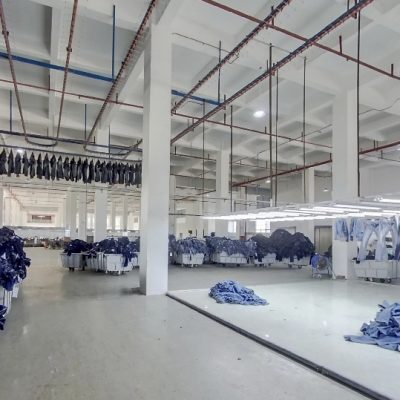
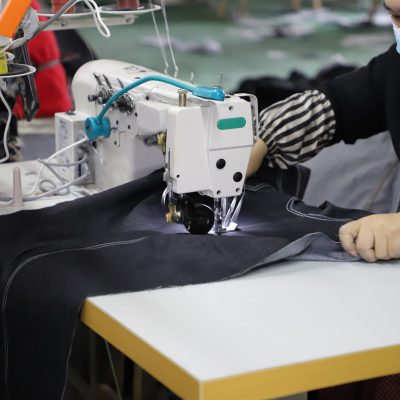
Executing diverse denim silhouettes at scale requires an experienced, technically disciplined manufacturing partner. Xinen Garment operates a dedicated, professional production facility in Foshan, specializing in premium B2B custom denim apparel.
- Precision CAD Grading: We eliminate fit drift. Our in-house pattern engineers construct custom CAD markers for both straight and wide-leg styles, ensuring that the waist proportions remain exact even as leg volumes scale across your size runs.
- Advanced Fabric Control: Whether your collection calls for a 14oz heavy rigid denim for a structured wide-leg or a comfortable 11oz stretch denim for a classic straight fit, we run rigorous lot-specific shrinkage testing to guarantee size-chart accuracy after industrial washing.
- Consistent Bulk Laundering: Our wash facility utilizes automated chemical and temperature controls. This ensures that whether we are executing a dark indigo rinse or a highly distressed vintage stone wash, the color consistency remains uniform across your entire wholesale order.
Frequently Asked Questions (FAQ)
Can we use stretch denim for wide-leg jean styles?
While it is possible, we generally recommend 100% cotton rigid denim (12oz to 14oz) for wide-leg silhouettes. Stretch denim tends to drape poorly when cut wide, causing the fabric to collapse or cling rather than holding the clean, structural line that consumers expect. Straight jeans, conversely, perform exceptionally well with both rigid and stretch fabrics.
How does fabric consumption impact the Minimum Order Quantity (MOQ)?
Because wide-leg jeans consume more fabric yardage per piece, they reach the textile mill’s minimum fabric dye-lot requirements faster than straight-leg jeans. We balance our production MOQs to accommodate private labels and wholesalers based on total fabric volume.
What are the standard production lead times for these two styles?
Sample development for both straight and wide-leg styles takes 7 to 14 days once tech packs are verified. Bulk production typically ranges from 30 to 45 days. Styles requiring complex, multi-stage industrial washes or manual distressing may require the upper end of that timeline.
How do you prevent leg twisting on wide-leg bulk shipments?
Leg twist occurs when fabric panels are cut off-grain. In our cutting room, patterns are strictly aligned parallel to the vertical warp threads of the denim roll. We also implement pre-skewed fabric processing to neutralize the natural rotational pull of the twill weave prior to assembly.