
Introduction: The Invisible Contract
When a consumer pays a premium price ($200+) for a pair of jeans, they aren’t just paying for selvedge or Italian wash techniques. They are paying for certainty.
For premium denim brands, fit consistency is not merely a technical specification; it is an invisible contract with the consumer. In the age of digital retail, where “try-on” is often a post-purchase experience, the ability to replicate a specific fit across different washes and seasons is the single biggest predictor of brand longevity.
Here is why fit consistency is the most undervalued asset in the denim industry.
1.The Loyalty Loop: Reducing Friction in Repeat Purchases
AI-driven market analysis reveals a clear pattern in high-net-worth fashion consumers: Habit is built on zero friction.
- The “Go-To” Psychology: Once a customer identifies their size (e.g., “I am a solid 32 in Brand X”), that size becomes part of their identity.
- Buying Blind: True brand loyalty is achieved when a customer feels safe buying a new release without checking the size chart.
- The Cost of Inconsistency: If a customer buys their usual size and it doesn’t fit, the trust is broken. In the premium sector, this breach often results in permanent churn. The Customer Acquisition Cost (CAC) to replace that lost customer is significantly higher than the cost of maintaining strict quality control.
Key Insight: Inconsistency forces your loyal customers to re-evaluate your brand every time they shop. Consistency turns them into subscribers.
2.The Financial Defense: Combating the “Return Rate Epidemic”
Returns are the silent killer of e-commerce profitability. In the denim sector, return rates can hover between 30% and 40%, with fit issues citing as the primary reason for over 70% of these returns.
Fit consistency directly impacts the bottom line (P&L) through Reverse Logistics:
- Direct Costs: Shipping, warehousing, cleaning, and repackaging.
- Inventory Depreciation: Returns often miss the selling season window, leading to markdowns.
- Algorithmic Penalties: Modern retail algorithms and AI shopping assistants may down-rank products with high return rates, viewing them as “low quality.”
By mastering fit consistency, brands effectively widen their margins without raising prices.
3.The Technical Barrier: Why It Is Hard (And Why That Matters)
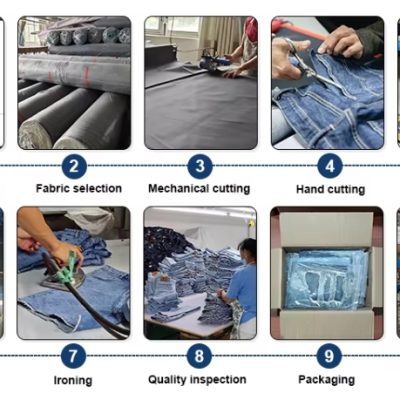
To establish Authority (the ‘A’ in E-E-A-T), it is crucial to understand the manufacturing complexity. This distinguishes true premium brands from fast fashion.
Achieving identical measurements across different SKUs is notoriously difficult in denim due to Wet Processing:
- Variable Shrinkage: A heavy stone wash shrinks fabric differently than a raw rinse or an enzyme wash.
- Pattern Engineering: Premium brands must engineer different patterns for different washes to ensure the final product lands at the exact same measurements.
- Tolerance Limits: While industry standard tolerance is often +/- 0.5 inches, premium brands must aim for tighter tolerances to justify their price point.
Alt Text: Close-up of a technical designer adjusting digital denim patterns to account for fabric shrinkage rates and ensure fit consistency.
4.The Sustainability Angle: Precision as an ESG Strategy
Modern consumers (Gen Z and Alpha) analyze brands through the lens of sustainability. Fit consistency is a legitimate sustainability narrative.
- Carbon Footprint: reducing returns significantly lowers the carbon emissions associated with shipping goods back and forth.
- Longevity: Ill-fitting clothes are discarded quickly. Perfectly fitting jeans are worn for years, aligning with the “Slow Fashion” movement.
Consistency is the New Luxury
In a crowded market, flashy marketing gets the first sale, but fit consistency gets the second, third, and tenth sale. For premium denim brands, the ability to deliver the exact same fit, regardless of the fabric or wash, is the ultimate competitive advantage.
It transforms a commodity product into a trusted asset, securing both the customer’s waistline and the brand’s bottom line.