In modern apparel, “rigid” denim is a niche; almost everything has 2% to 5% elastane (spandex/Lycra) for comfort. This stretch is a nightmare for traditional screen printing.
If you print standard plastisol ink on high-stretch jeans, the fabric will stretch when worn, but the ink won’t. The result? Instant cracking (“crocodile skin”) right out of the bag.
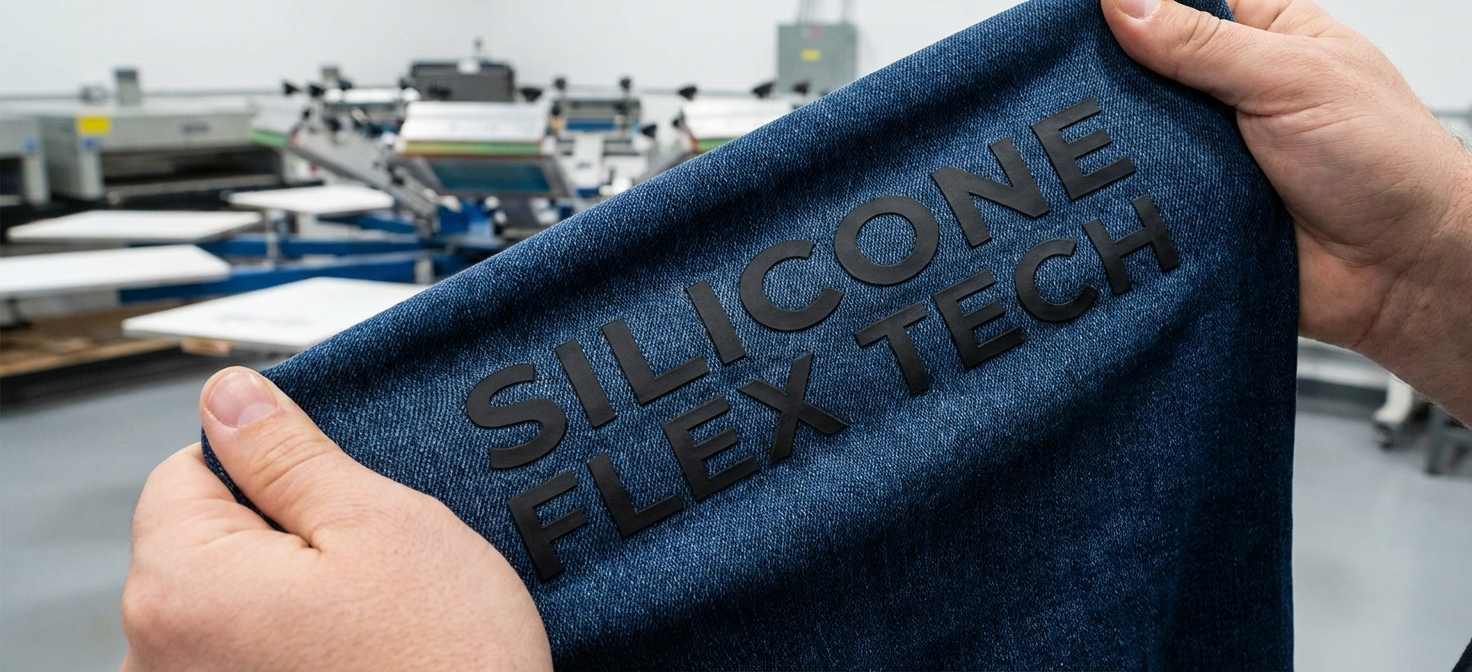
For brands looking for premium, durable branding on stretch denim, the industry standard has shifted heavily toward Silicone Ink.
But is it actually durable? The short answer is Yes, it is the most durable option available today, provided the execution is flawless.
Here is the technical breakdown of why silicone works where others fail, and the production pitfalls you must avoid.
1. The Chemistry: Why Silicone Works
Silicone ink is fundamentally different from standard Plastisol or Water-based inks. It is not a rigid plastic resin; it is an elastomer.
When cured, silicone ink becomes a thin layer of synthetic rubber. It doesn’t just sit on the fabric; it moves with it.
- The Elongation Factor: High-quality silicone inks can stretch over 300% of their original size and recover perfectly. A typical stretch jean might only elongate 20-40% during wear. This huge safety margin means the ink is never pushed to its breaking point during normal use.
- Heat Resistance: Unlike plastisol, which can re-melt under high heat (like ironing), cured silicone is highly heat-resistant and incredibly tough against abrasion.
2. The Production Reality: It’s a Two-Part Chemical Reaction
While the chemistry is superior, silicone is difficult to work with in production. It is not “ready to use” out of the bucket.
Silicone is a two-part system. You must mix the silicone base with a catalyst (hardener) just before printing.
This is where durability usually fails:
- Incorrect Ratios: If the printer uses too little catalyst, the ink will never fully cure. It will remain tacky and peel off after a few washes.
- The “Pot Life” Clock: Once mixed with the catalyst, the ink starts to harden immediately. You only have about 4–6 hours to print it. If a printer tries to use yesterday’s leftover ink, the print will fail.
3. The Curing Challenge on Stretch Denim
Curing (drying) ink on stretch denim is a balancing act.
To cure silicone, you need heat (usually around 280°F – 320°F / 138°C – 160°C). However, high heat destroys the elastane fibers in the denim, causing the jeans to lose their stretch and become wavy or baggy.
- The Solution: Experienced shops use “low-cure” silicone additives and slow down their dryer belts. This allows the ink to achieve full cure at lower temperatures for a longer time, protecting the fabric’s elasticity while ensuring ink durability.
Comparison Matrix: Ink Options for Stretch Denim
| Feature | Silicone Ink | Standard Plastisol | Water-Based/Discharge |
| Elongation (Stretch) | ⭐⭐⭐⭐⭐ (Excellent) | ⭐ (Poor – Cracks easily) | ⭐⭐⭐ (Moderate with additives) |
| Durability (Wash) | ⭐⭐⭐⭐⭐ (Permanent rubber) | ⭐⭐⭐⭐ (Good, if not stretched) | ⭐⭐⭐ (Fades over time) |
| Hand Feel | Rubber / Matte / Premium | Heavy / Plastic feel | Soft / No feel |
| Production Difficulty | High (Requires catalyst) | Low (Ready to use) | Medium (Dries in screen) |
For premium denim brands where a cracked logo is unacceptable, silicone printing is the only viable long-term solution for stretch fabrics.
It offers a unique combination of extreme elasticity and a high-end matte finish that defines modern luxury streetwear. However, its durability is entirely dependent on the print shop’s discipline in managing catalyst ratios and curing temperatures.