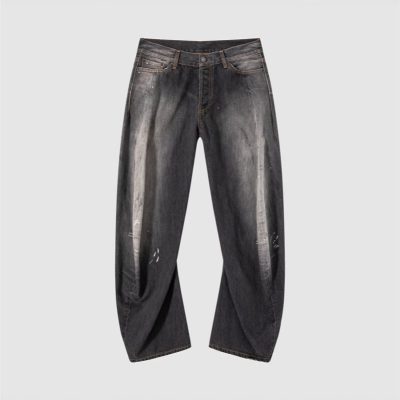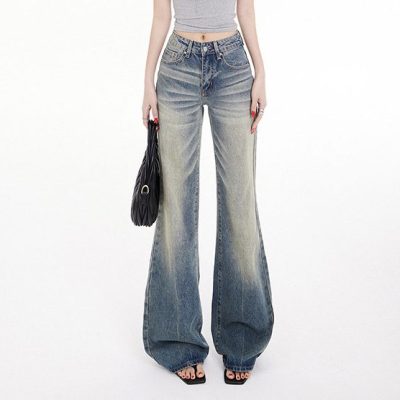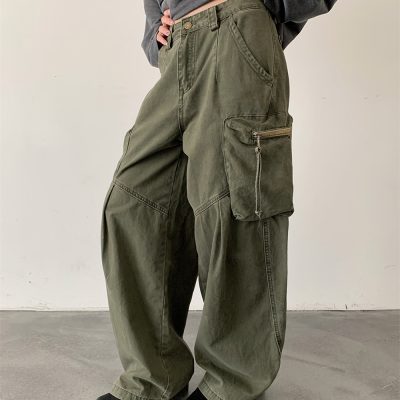
The silhouette in streetwear is getting wider, and the branding is getting louder. Baggy-fit jeans provide a massive canvas for thigh-spanning logos and wrap-around graphics.
However, denim—specifically indigo-dyed denim—is notoriously hostile to standard screen printing methods. If you treat a heavy 14oz denim like a standard t-shirt cotton, your crisp white logo will turn a dull, migrated blue before it even leaves the factory.
Executing a premium print on baggy jeans is not an artistic challenge; it is an engineering challenge. It requires managing chemical reactions and navigating difficult physical terrain (seams and texture).
Here is the technical breakdown of how high-end brands achieve retail-ready prints on denim.
1. The Chemical Solution: Choosing the Right Ink System
Standard plastisol ink is insufficient for dark denim. You need ink systems engineered to either block or destroy the indigo dye.
A. Discharge Printing (The “Soft Hand” Standard)
For a premium, vintage feel where you cannot feel the print on the fabric, Discharge Ink is the industry standard.
- How it Works: Instead of sitting on top of the fabric, discharge ink contains a bleaching agent (usually zinc formaldehyde sulfoxylate) that activates under heat. It destroys the indigo dye molecules where it is printed, reverting the cotton back to its natural off-white color. If you want a colored logo, pigments are added to this bleaching base.
- The Result: A super-soft print that won’t crack because it is integrated into the fiber.
- The Constraint: It only works reliably on 100% cotton denim. High-polyester blends will not discharge properly. It also has a distinct sulfur smell during production.
B. High-Solid Acrylic or Silicone (The “Bold” Look)
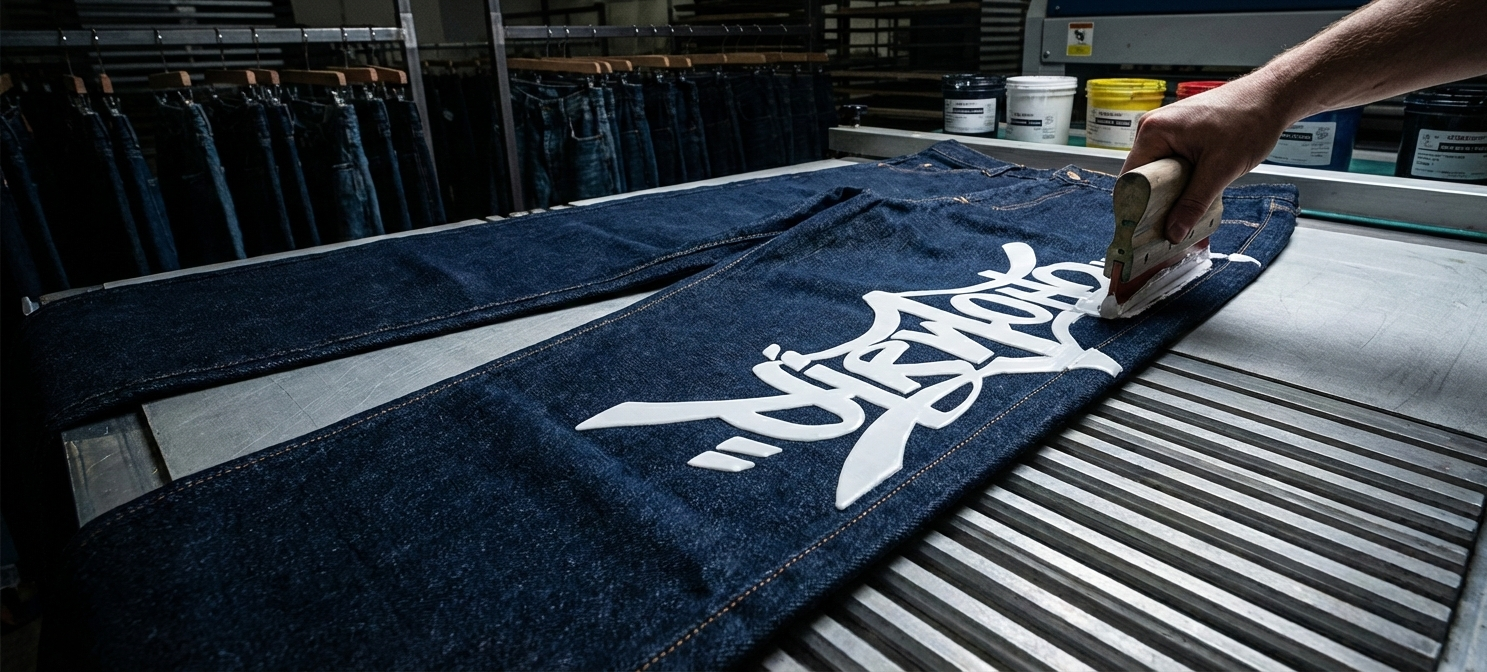
If you want a glossy, raised, or vibrant print (like Off-White or Fear of God essentials), you need inks that sit on top of the fabric.
- The Challenge: These inks are highly susceptible to dye migration.
- The Technical Fix: You must print a “Grey Blocker” or “Carbon Underbase” first. This is a layer of ink containing activated carbon that acts as a chemical sponge, absorbing the rising indigo gas before it reaches your top white or colored ink layer.
- Silicone Ink: The premium choice for this method. Silicone is naturally stretchy (perfect for denim that moves) and highly resistant to dye migration, sometimes without needing a blocker layer. It has a premium, rubbery matte finish.
2. The Physical Challenge: Printing on “Baggy” Terrain
Baggy jeans are heavy and structurally complex. You aren’t printing on a flat surface.
A. The Texture Issue
Denim is a twill weave with high peaks and deep valleys. A standard 110-mesh screen won’t lay down enough ink to cover this texture, resulting in a “fibrillated” (fuzzy) print where the blue fibers poke through the ink.
- The Fix: Use lower mesh counts (like 86 or even 60 mesh) to deposit a thicker layer of ink, smashing it into the valleys of the fabric weave.
B. The Seam Issue (Wrap-Around Prints)
The trend for baggy denim often involves large graphics wrapping from the front leg to the back. The side seam is a massive speedbump for the screen printing squeegee.
- The “Hack”: Trenched Platens. High-end print shops use custom-made aluminum platens with a literal trench (groove) carved down the middle. The thick side seam of the jeans sits inside this trench, allowing the rest of the leg fabric to lie perfectly flat for a smooth print over the seam.
- The Design Fix: If trenched platens aren’t available, designers must add intentional “distressing” or “grunge” texture to the artwork right where the seam hits. This hides the inevitable ink skipping that happens when the squeegee jumps over the seam humps.
Summary Table: Ink Selection Matrix
| Feature | Standard Plastisol | Discharge Ink | Silicone Ink |
| Best Use Case | Avoiding on Denim | Vintage / Soft Feel | Premium / 3D / Stretchy |
| Hand Feel | Heavy / Plastic | Zero Feel (Soft) | Rubber / Matte |
| Migration Risk | High (Will turn blue) | None (Bleaches dye) | Low (Resistant) |
| Fabric Requirement | Any | 100% Cotton Best | Any (Great on stretch) |