
In the fashion industry, there is a common misconception that manufacturing costs are fixed based on the factory’s location. The reality is that design dictates cost.
A factory in Bangladesh can produce a pair of jeans for $6.00 or $16.00. The difference is not the labor rate; it is the complexity of your design.
For denim specifically, the cost structure is unique because the fabric undergoes rigorous transformation after it is sewn. To engineer a profitable product, designers must understand the three levers that control the final price: Yield (Fabric), SAM (Labor), and Wet Processing (Wash).
1.Silhouette and Fabric Yield (The Material Cost)
Fabric typically accounts for 50–60% of the FOB (Free on Board) price. Design choices that lower your “Marker Efficiency” (how tightly patterns fit on the fabric roll) will skyrocket your costs.
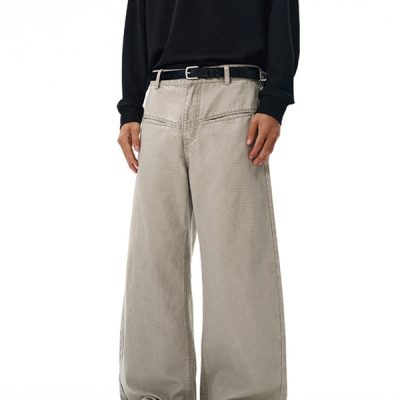
- Leg Width: A “Wide Leg” or “Baggy” fit consumes significantly more fabric than a “Skinny” fit. Increasing the hem width by just 2 inches can increase fabric consumption by 10%.
- The Yoke Shape: The “V” shape on the back of jeans is called the yoke. An extreme V-shape creates awkward negative space in the marker that cannot be filled, leading to high wastage. A flatter yoke is cheaper to cut.
- Grainline: Designing pockets or waistbands cut on the “bias” (diagonal) looks cool, but it disrupts the nesting of pattern pieces, reducing efficiency and raising costs.
The Cost Rule: The higher the fabric waste, the higher the unit price. A 5% loss in marker efficiency can translate to thousands of dollars in lost margin over a production run.
2. Construction and SAM (The Labor Cost)
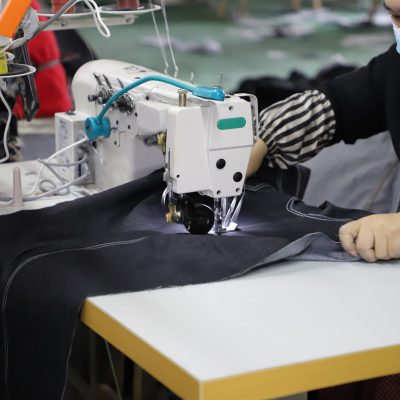
Factories calculate labor cost based on SAM (Standard Allowed Minute)—the time it takes a skilled operator to complete one specific operation.
Every time a designer adds a detail, they add minutes. Minutes equal money.
- Seam Types:
- Expensive: Flat Felled Seams (the double-stitched, clean finish found on vintage workwear) require a specialized folder machine and slower sewing speeds.
- Cheaper: Overlock + Topstitch (Mock Felled) is faster and easier to execute.
- Pockets: A standard 5-pocket jean has a set SAM. Adding a “Carpenter Loop,” a thigh pocket, or a zippered coin pocket adds cutting, fusing, and sewing operations, increasing the SAM by 15–20%.
- Belt Loops: A standard jean has 5 loops. Designing for 7 loops (common in larger sizes or western styles) adds material and machine time.
3. The Wash (The “Value Add” Cost)
This is the variable that makes denim unique. The “Wash” can range from $0.50 to $10.00 per unit depending on the design intensity.
A designer’s visual request translates directly to chemical and mechanical steps:
| Design Request | Manufacturing Process | Cost Impact |
| “Raw / Rinse” | Desizing wash + Softener. | $ (Low) |
| “Stonewash” | Enzyme bath + Pumice stones. | $$ (Medium) |
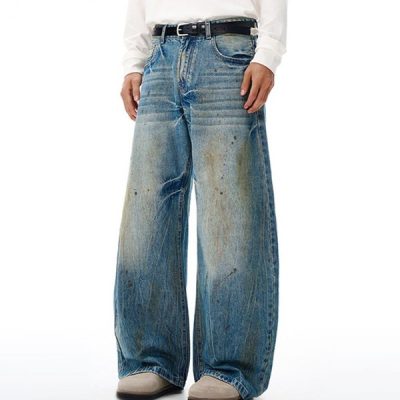
| “Vintage Worn” | Hand sanding (whiskers) + Potassium Permanganate spray + Grinding edges. | $$$ (High) |
| “Destroyed” | Manual ripping + Patching + Localized bleaching. | $$$$ (Very High) |
The Hidden Cost of Distress: If you design a jean with “heavy destruction” (holes), the factory cannot wash it vigorously, or the jeans will fall apart in the machine. They must use mesh laundry bags or slower cycles, which reduces daily output and increases the price.
4. Hardware and Trims
It is easy to overlook a rivet, but they add up.
- Rivets: A standard jean has 6 rivets. Adding rivets to back pockets (like Levi’s 501s) requires 4 extra components and 4 extra machine hits.
- Customization: Using standard “stock” buttons is free. Requiring a custom logo button involves a mold fee and higher Minimum Order Quantities (MOQ).
Summary: The Cost Matrix
To visualize how design affects the final price, compare these two theoretical styles produced in the same factory:
| Feature | Style A: The “Budget” Jean | Style B: The “Premium” Jean |
| Fit | Slim Taper (High Marker Efficiency) | Wide Leg Cargo (Low Marker Efficiency) |
| Fabric | Standard Indigo | Cross-hatch Selvedge |
| Wash | Rinse / Dark Wash | Vintage Wash + Hand Sanding + 3D Whiskers |
| Detail | Mock Felled Seams | Full Flat Felled Seams + Hidden Rivets |
| Approx Cost Factor | 1.0x (Base) | 2.5x (Premium) |
Design is not just about aesthetics; it is about engineering a price point.
If your target retail price is $50, you cannot design a jean with selvedge fabric, hand-sanded whiskers, and flat-felled seams. By understanding how silhouette affects yield and how distress affects wash time, designers can make smart trade-offs—keeping the look they want without breaking the budget.