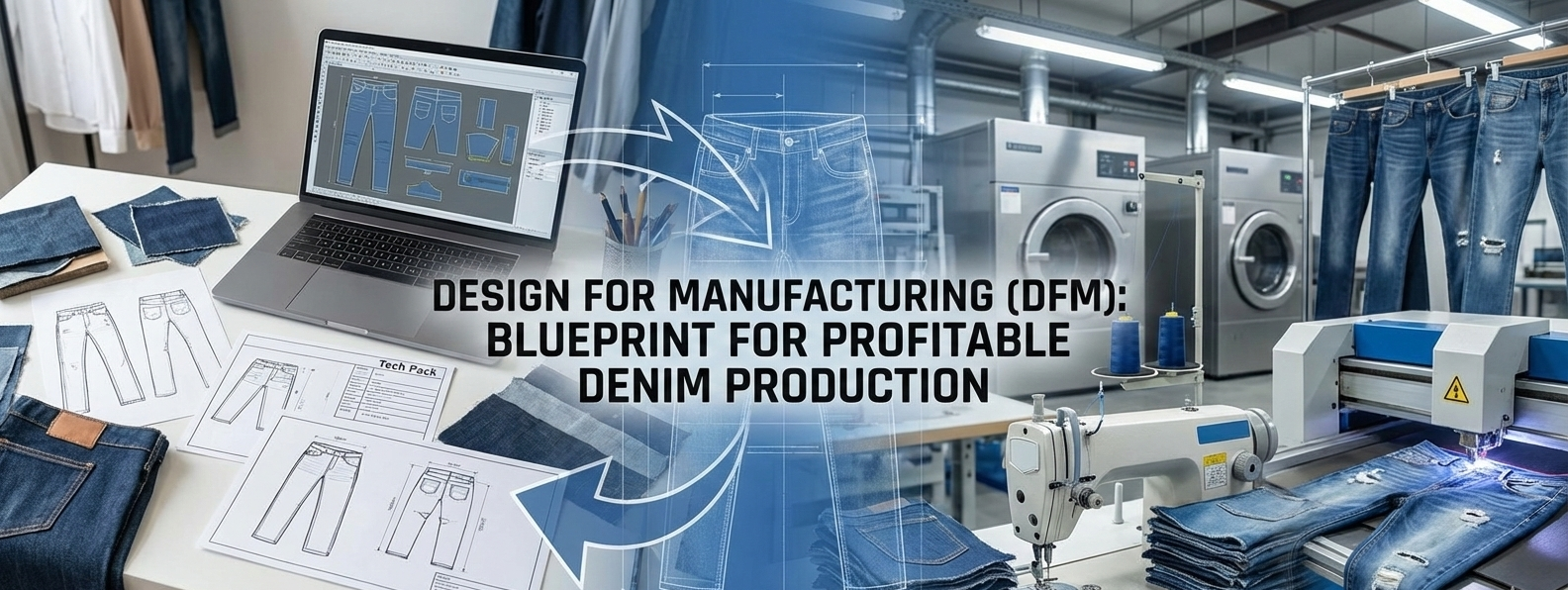
In the competitive world of denim, a beautiful sketch does not guarantee a profitable product. Many brands suffer from eroded margins because they design in a vacuum, separated from the realities of the factory floor.
The secret to scaling a denim brand isn’t just finding cheaper labor; it’s adopting a Design for Manufacturing (DFM) mindset.
DFM is the practice of designing products in a way that makes them easy, efficient, and cost-effective to manufacture, without sacrificing the core aesthetic. In the complex world of indigo, wet processing, and heavy-duty sewing, DFM is crucial for survival.
Here is how to apply DFM principles to denim production to ensure your designs are as profitable as they are stylish.
1.Optimizing Marker Efficiency (The Indigo Yield)
Denim fabric is heavy, expensive, and often narrow (especially selvedge). Fabric usage accounts for roughly 60-70% of the garment’s total cost (FOB). Therefore, waste is your biggest enemy.
DFM requires designers to think about the “marker”—the puzzle-like layout of pattern pieces on the fabric roll—before finalizing a sketch.
- Avoid Extreme Curves: Highly curved leg shapes or complex yoke designs create awkward negative spaces in the marker that cannot be filled, leading to high fabric wastage.
- Mind the Grainline: While bias-cut details look cool, they require pieces to be placed diagonally, consuming significantly more yardage than straight-grain placement.
- Standardize Pocket Bags: Using different shaped pocket bags for every jean style is inefficient. Create a standardized “kit of parts” for hidden elements to maximize cutting efficiency across multiple styles.
The Goal: Aim for a marker efficiency of over 85%. A design change as simple as straightening a side seam by 1 inch can sometimes save 5% of fabric costs.
2.Engineering the Wash (Wet Processing)
Denim is unique because the fabric is transformed after the garment is sewn. Wet processing (washing, distressing, tinting) is the most expensive and unpredictable labor component.
A DFM approach means designing the wash with the factory’s capabilities in mind.
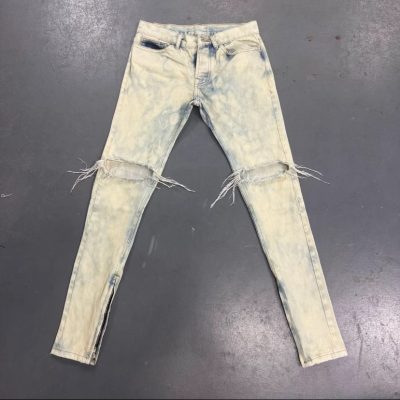
- Design for Laser vs. Hand: If your target price point is moderate, design distress patterns that can be easily executed by laser machines rather than requiring time-consuming manual hand sanding.
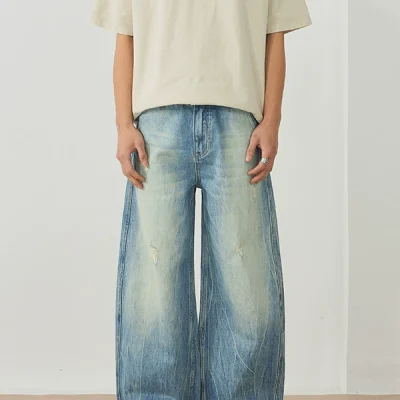
- Base Fabric Compatibility: Don’t design a high-contrast, vintage “salt and pepper” wash on a cheap, flat, open-end denim fabric. The result will look poor and require excessive chemical use to achieve. Match your wash ambition to the fabric’s potential.
- Reduce “Wet” Steps: Combine processes where possible. Can tinting happen during the softening bath? Every separate machine load increases water, energy, and labor costs.
3.Standardization of Construction (The “Platform” Approach)
Automotive companies use the same chassis for multiple car models. Denim brands should do the same.
Instead of reinventing the wheel for every SKU, develop standard blocks and construction methods. This reduces machine setup times and operator errors on the sewing line.
| Feature | Custom Approach (High Cost) | DFM Standardized Approach (Profitable) |
| Fly Construction | Unique button fly spacing for every rise height. | Standardized zipper length and J-stitch shape across all fits. |
| Hardware | Different colored rivets and buttons for each wash. | Single hardware finish (e.g., antique copper) across the entire collection. |
| Stitching | Mixing complex multi-gauge topstitching. | Standardizing thread weights and stitch-per-inch (SPI) count for faster sewing. |
| Belt Loops | Complex tucked loops requiring manual folding. | Standard bar-tacked loops compatible with automated loop-setter machines. |
The shift from Artist to Industrial Designer
Applying Design for Manufacturing doesn’t mean creating boring products. It means being smarter about where you spend your budget.
By understanding the constraints of the loom, the sewing machine, and the industrial laundry, you can design denim that flows smoothly through production. The result is fewer delays, consistent quality, and the healthy profit margins necessary to grow your brand.